ServicesWhole-Home Filtration
Whole-Home Water Filtration in Buda
A whole-home system filters water where it enters the house, so every tap, shower and appliance gets treated water. First comes a free water test, then we explain the media choices, from standard to catalytic carbon, including what each takes out and what it leaves in.
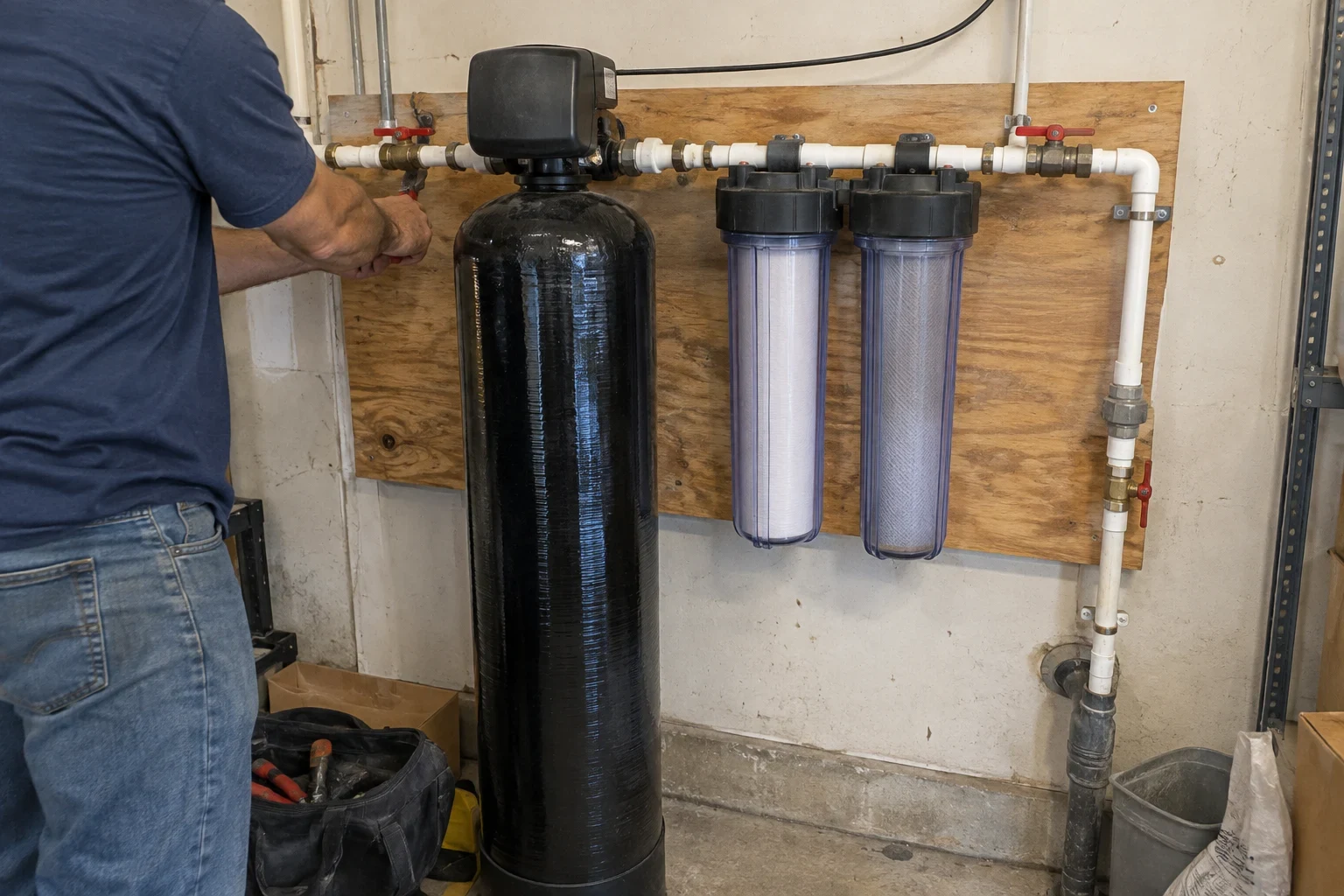
What a whole-home filter does in your house
Utilities treat water with a disinfectant so it stays safe across miles of pipe. That same disinfectant is often what you taste at the sink and smell in a steamy bathroom. A whole-home system, also called a point-of-entry filter, mounts on the main line where water enters the house. It removes chlorine or chloramine, sediment and many taste and odor compounds before water reaches any tap, shower or appliance.
It fits best when the trouble is everywhere in the house: a pool smell after each shower, tight, itchy skin, or grit at several sinks. If only your drinking water matters to you, a small under-sink unit from our Reverse Osmosis Systems page could suit you better. Carbon also does nothing for chalky white crust on faucets. That comes from hardness, which we handle with Salt-Free Water Conditioners or Water Softener Installation.
We put the media choices next to each other and say plainly what each handles well and where it falls short. The decision is yours.
What goes into the system we install
- Sediment prefilter
- A pleated or spun polypropylene cartridge catches sand, rust flakes and grit before they reach the carbon. Pleated cartridges can be rinsed and reused a few times. Spun cartridges trap finer particles but get replaced rather than cleaned. Either type protects the more expensive media behind it.
- Standard activated carbon
- Coconut-shell granular carbon is very good at removing chlorine and improving taste and smell. It is the most common choice and the easiest on the budget. Its weak spot is chloramine, which it handles slowly.
- Catalytic carbon
- Catalytic carbon has a treated surface that breaks down chloramine far faster than standard carbon. If your test shows chloramine, this is the media we recommend, even though it costs more to fill the tank.
- KDF copper-zinc layer
- KDF-55 is a copper-zinc media sometimes layered under the carbon. It helps with chlorine at hot water temperatures and discourages bacterial growth inside the tank. We add it only when your water gives it a job to do.
- Tank or cartridge housing
- A tall media tank holds more carbon and goes longer between changes. Big cartridge housings cost less up front and fit tighter spaces, but the cartridges need replacing more often. We look at your space and water use and price out both.
- Bypass and shutoff valves
- Every install includes a bypass so the system can be serviced without cutting water to your home.
Signs your home could use whole-house filtration
A chlorine smell when you shower
Hot water releases chlorine into the air, and a closed bathroom holds onto it. Treating water at the main line removes it before it ever reaches the water heater, so your shower stays clear of it.
Tap water with a pool taste
If everyone in the house grabs bottled water because the tap tastes off, carbon filtration is usually the fix.
Skin and hair that feel dry after bathing
Many people notice softer skin and hair once chlorine is out of the shower water. We see that as a nicer everyday feel, and we don't promise health results.
Sandy bits in screens and toilet tanks
Fine sand or rust flakes clogging faucet aerators and settling in toilet tanks point to sediment. A prefilter stops them at the spot where water enters your home.
A filter on every sink and shower head
Keeping up with a fridge pitcher and a handful of shower filters gets old fast. One system on the main line usually replaces the whole collection.
How a whole-home install goes
- 1
A free test in your home
We check chlorine, chloramine, hardness, iron and sediment, then explain what the readings mean in everyday words. For more detailed lab work, see Water Testing & Analysis.
- 2
Choosing media and size
We pick media that fits your readings and size the tank to your flow rate and bathroom count. The quote names the equipment and media, so you can hold it up against any other offer.
- 3
Install day
We turn off the water, cut into the main line where it enters the house, often in the garage, and mount the prefilter, tank and bypass. Floors and walls stay covered while we work. We rinse the new carbon until the water is clear, test again and tidy up before leaving.
- 4
Future media changes
Before leaving, we let you know when the prefilter and carbon will need changing and what that involves, so nothing surprises you down the road.
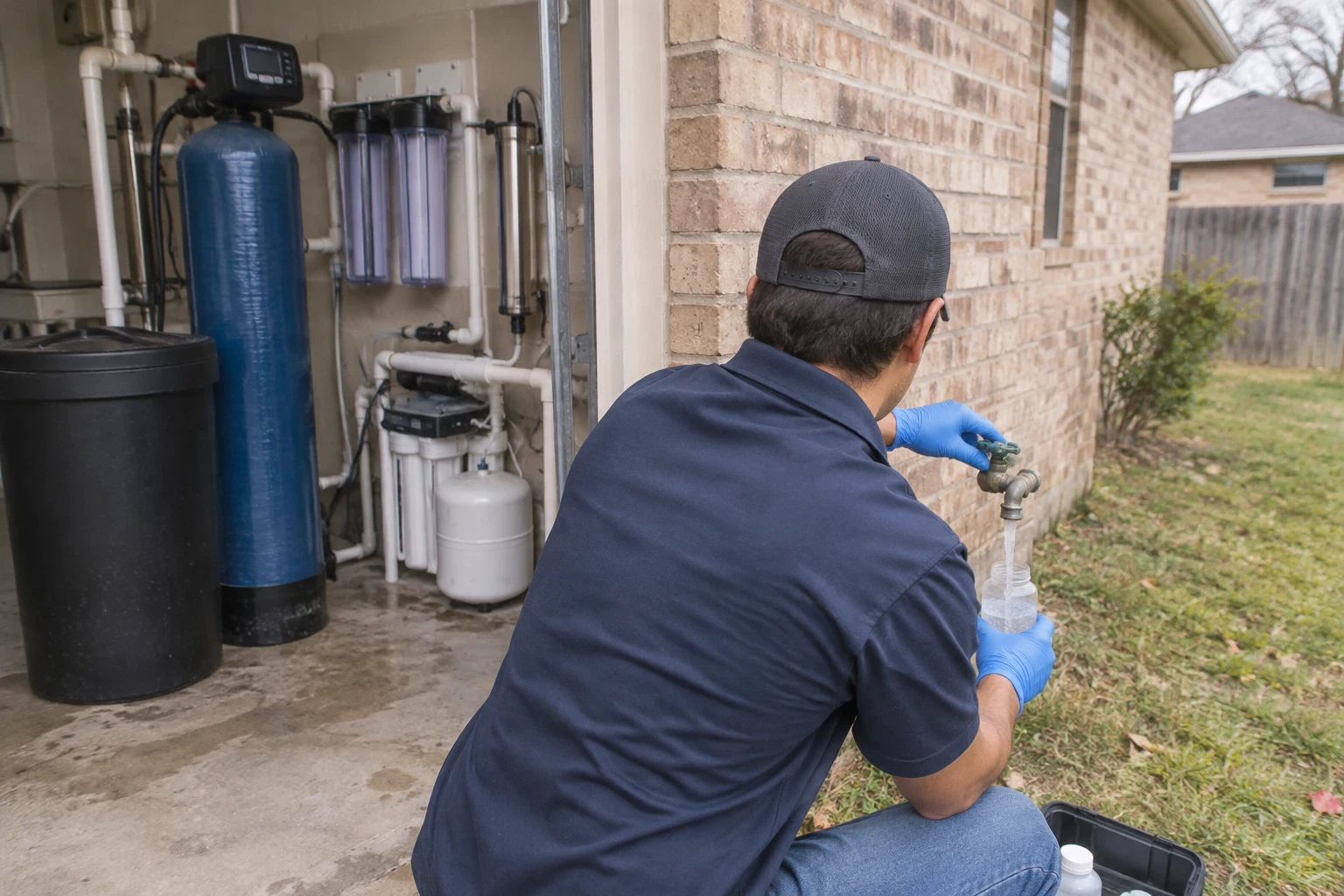
What goes into your whole-home quote
Your quote mostly comes down to two things: what your water test turns up and how much water your family uses on a typical day. Installation is free, so the price covers the equipment and the media that fills it. Once the test is done, we walk you through the number by phone with each part listed by name.
- The type of carbon
- Coconut-shell carbon sits at the lower end. Catalytic carbon costs more, and it only pays for itself when your water carries chloramine. If the test shows plain chlorine, you can skip that expense.
- Tank size for your flow
- A house with three or four bathrooms can have showers, a dishwasher and a washer going at once in the morning. The tank needs enough capacity to keep pressure steady through that rush. Larger tanks also hold more media, so changes come around less often.
- Media tank or cartridges
- Cartridge housings are easier on the budget at the start but need fresh cartridges more often. A media tank asks more up front and less each year after.
- Extra stages
- Adding a KDF layer, a finer sediment cartridge or a conditioner next to the filter raises the total. We only suggest them when your results give them a reason to be there.
Questions about whole-home filters
Something not covered here? (512) 960-1590
Does a whole-home filter soften water?
It doesn't. Carbon is made to catch chlorine, odors and many organic compounds, while calcium and magnesium, the minerals behind white crust on fixtures, pass straight through. If your test shows hardness worth treating, we can add a salt-free conditioner or a softener alongside the filter.
Will it take out lead or fluoride?
Tank carbon isn't made for fluoride, and we wouldn't count on it for lead. An under-sink reverse osmosis unit handles drinking and cooking water much better. Lots of homes use both: the whole-home filter for showers and laundry, plus an RO faucet in the kitchen.
Is catalytic carbon worth paying more for?
It is when your water has chloramine. Standard carbon removes chlorine well but works through chloramine slowly. The free test shows which disinfectant you have, so you only pay for catalytic media when it's needed.
Will my water pressure drop?
A correctly sized system creates a slight drop most households never notice. Pressure trouble usually comes from a tank that's too small or a prefilter left in too long. We size by number of bathrooms and tell you when the cartridge is due, so neither surprises you.
How long is the water off during install?
In most homes it's a few hours while we open the main line and mount the equipment. We give you an estimate before starting, then flush and test again before the water goes back on.
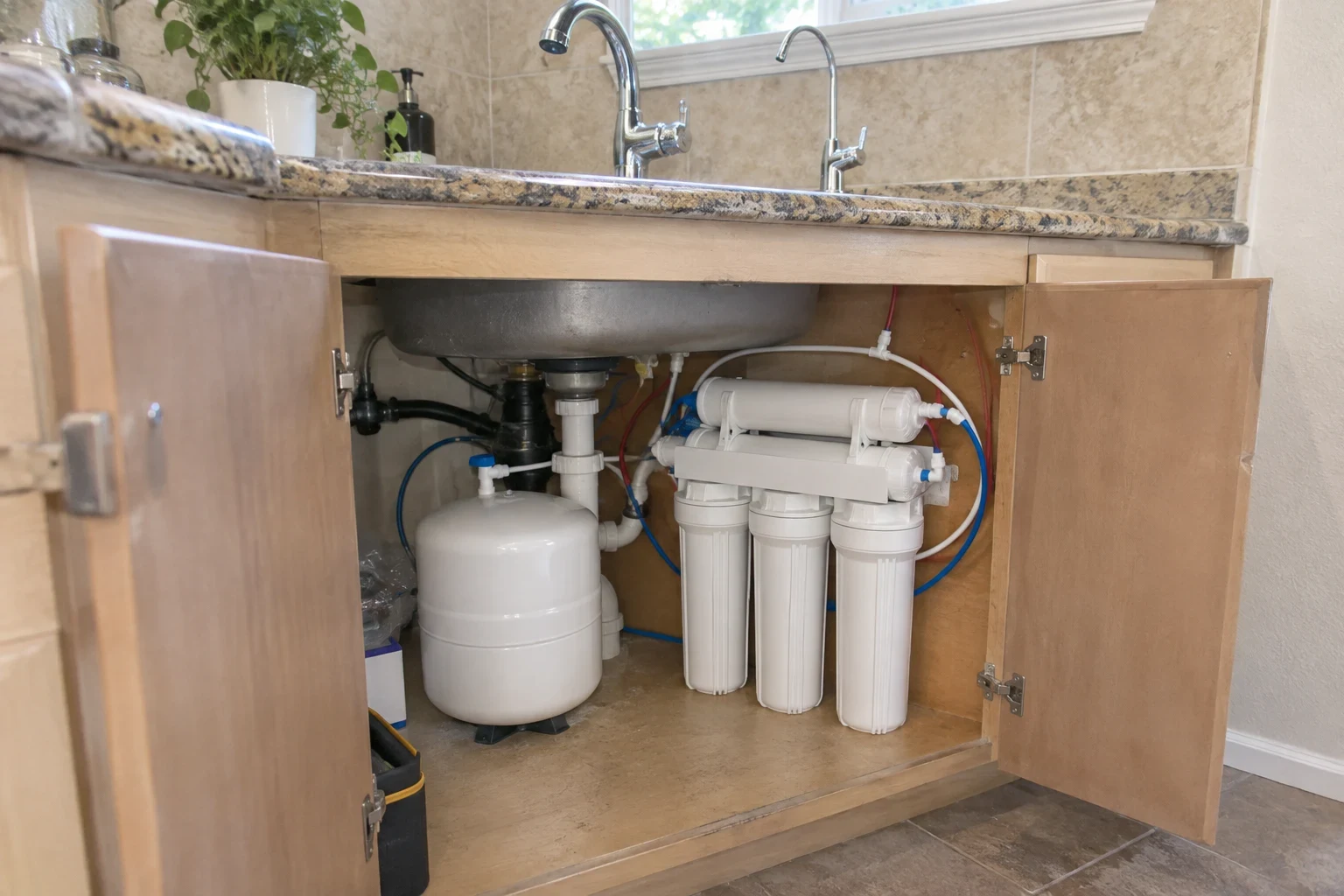
Start with a free water test
We will test your water at your home, show you which carbon fits it and explain the trade-offs. Then you get a clear quote and decide on your own time.