ServicesReverse Osmosis Systems
Reverse Osmosis Systems in Buda
A reverse osmosis system gives your kitchen a tap of very clean water for drinking, coffee and cooking. We test your water first, explain each part of the system and what it is made of, then install the setup that suits your sink and your habits.
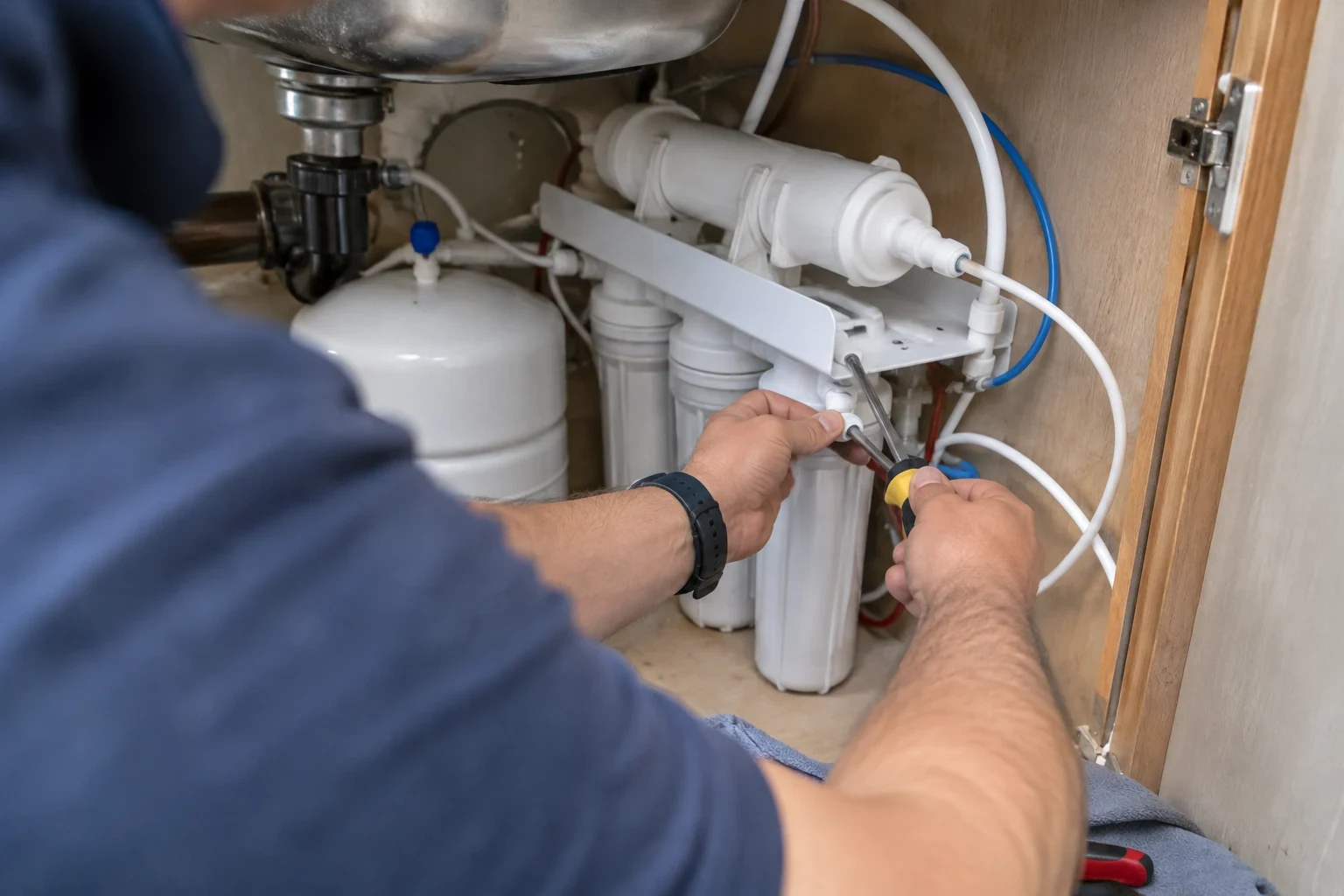
What reverse osmosis does at your sink
Reverse osmosis pushes water through a semipermeable membrane with pores far smaller than a bacterium. Dissolved minerals, salts, lead from old fixtures and many trace chemicals stay behind and rinse to the drain. What comes out is low in dissolved solids and tastes clean.
It is a point-of-use system. It lives under one sink and serves one faucet, and it can also feed your refrigerator's water line and ice maker. If you want treated water at every shower and washing machine, our whole-home filtration page covers that. Many families pair the two.
The parts matter more than the brand name on the box. Membrane type, prefilter material and tank design decide how long the system lasts and how it tastes, so we talk through each one with you before you choose.
Each part we install and what it does
Sediment prefilter
A spun polypropylene cartridge traps sand, rust flakes and grit ahead of the finer stages. It costs little to swap and guards everything downstream.
Carbon block prefilter
Most membranes are thin-film composite, which filters more than older cellulose types but breaks down with chlorine. A carbon block placed before it removes chlorine and improves taste, which helps the membrane last.
Thin-film composite membrane
This is the core of the system. Over time hard water scales a membrane, so we measure your hardness during the test and tell you straight whether a softener or salt-free conditioner ahead of it would extend its life.
Storage tank or tankless design
A pressurized steel tank with a butyl bladder keeps a few gallons ready, which helps households that fill pitchers and pots. Tankless units free up cabinet space and make water as you need it, but they draw more power and need a good outlet close by.
Optional remineralizing stage
Plain RO water tastes flat to some people. A calcite post-filter returns a bit of calcium and magnesium for a fuller taste.
Dedicated faucet and fittings
We install a separate drinking faucet in the finish you choose and run food-grade polyethylene tubing, with a correct drain connection and an air gap where one is required.
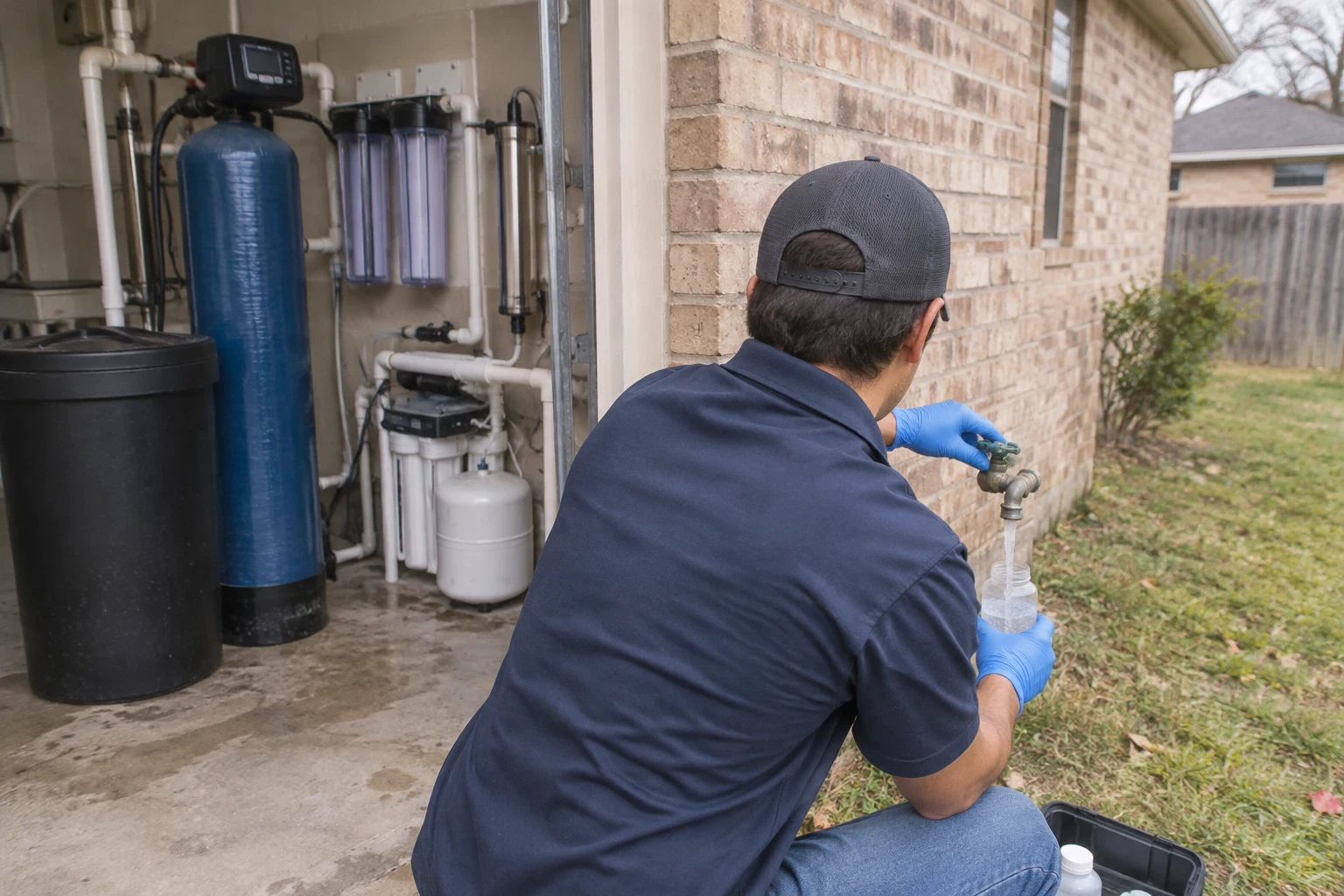
When reverse osmosis makes sense for your home
- Bottled water fills your pantry
- If you keep hauling cases home or waiting on jug deliveries, a dedicated RO faucet can take their place and give you the shelf space back.
- Chalky spots on kettles and glasses
- That white crust in your kettle or coffee maker is mineral buildup left behind as water heats and dries. An RO membrane removes most of those minerals from your drinking and cooking water.
- Older plumbing in your home
- Aging fixtures or old solder can leave trace lead in tap water. A reverse osmosis membrane is among the most effective tools for reducing it at the kitchen sink.
- Chlorine taste in coffee and tea
- Carbon stages take out that swimming pool taste and smell, and the membrane catches what the carbon misses.
- You want extra assurance
- Your water may meet every standard and you may still want another layer of protection, maybe for a new baby or a relative with health concerns. That is a perfectly good reason.
How an RO install goes
- 1
Free water test
We start at your kitchen tap with readings for hardness, total dissolved solids, chlorine and water pressure. Those numbers guide which membrane and prefilter materials make sense, and they tell us if a booster pump is needed for low pressure.
- 2
A clear recommendation
We go over the material choices, what each one costs to maintain and the setup we would choose for your water. You get your quote by phone or during the visit, with no pressure to decide that day.
- 3
Installation under your sink
Installation is free. We fit a shutoff valve on the cold line, tie into the drain, place the tank and drill the faucet hole. On granite and quartz we use a diamond bit and take it slow.
- 4
Flush, test and clean up
We flush the new filters and membrane, let the tank fill and take a second dissolved solids reading so you can compare before and after. Then we wipe out the cabinet, haul away the packaging and show you how filter changes work.
What moves the price of a reverse osmosis setup
We install at no charge, so your quote is mostly the system and the materials built into it. A basic unit with a storage tank and a tankless model with a remineralizing stage sit far apart on price. We explain each line of your quote in plain terms before you decide.
- Storage tank versus tankless
- Tankless units cost more up front and need an electrical outlet inside the sink cabinet. Our 5-stage tank reverse osmosis system (sediment, GAC, carbon block, RO membrane and post carbon, with an under-sink storage tank) is the lower-price option, while our tankless reverse osmosis system (800 gallons per day, 7 stages) costs more.
- How many filter stages
- Every extra stage, such as remineralization or a second carbon cartridge, raises the price a little and adds one more cartridge to replace down the road.
- Your water and pressure
- If your water is on the hard side or the pressure at the tap is weak, you may need pretreatment or a booster pump. That adds equipment, but it helps the membrane last.
- Extra connections
- Running treated water to your refrigerator or ice maker calls for more tubing and fittings, and the run gets longer when the fridge sits across the kitchen.
- Filter changes over time
- Expect to replace prefilters roughly once a year and the membrane every few years. Your water and how much you drink decide the exact schedule.
Common questions about reverse osmosis
- Does RO send water down the drain?
- A portion, yes, and that is by design. The membrane flushes itself while it filters, and the flush water carries off the rejected minerals so they don't collect. Newer designs and permeate pumps reduce the amount a good deal, and we can go over the numbers for each option with you.
- Does RO water taste flat?
- Some people can tell, because most minerals come out. A remineralizing post-filter adds a little back, and most people enjoy the taste. Others like the clean, neutral flavor and leave that stage out.
- Can it feed my fridge and ice maker?
- In most kitchens, yes. We run tubing from the RO unit to the water connection behind the refrigerator. Many people say their ice turns out clearer and the door dispenser tastes better after the hookup.
- Is a softener required ahead of RO?
- Not in every home, and the water test decides it. When your water is harder, a softener or salt-free conditioner placed before the system can help the membrane last longer. If yours doesn't need one, we'll say so.
- How long is the install?
- Most under-sink installs take a couple of hours. Once we're gone, the storage tank takes a few more hours to fill completely, but you can use the faucet in the meantime.
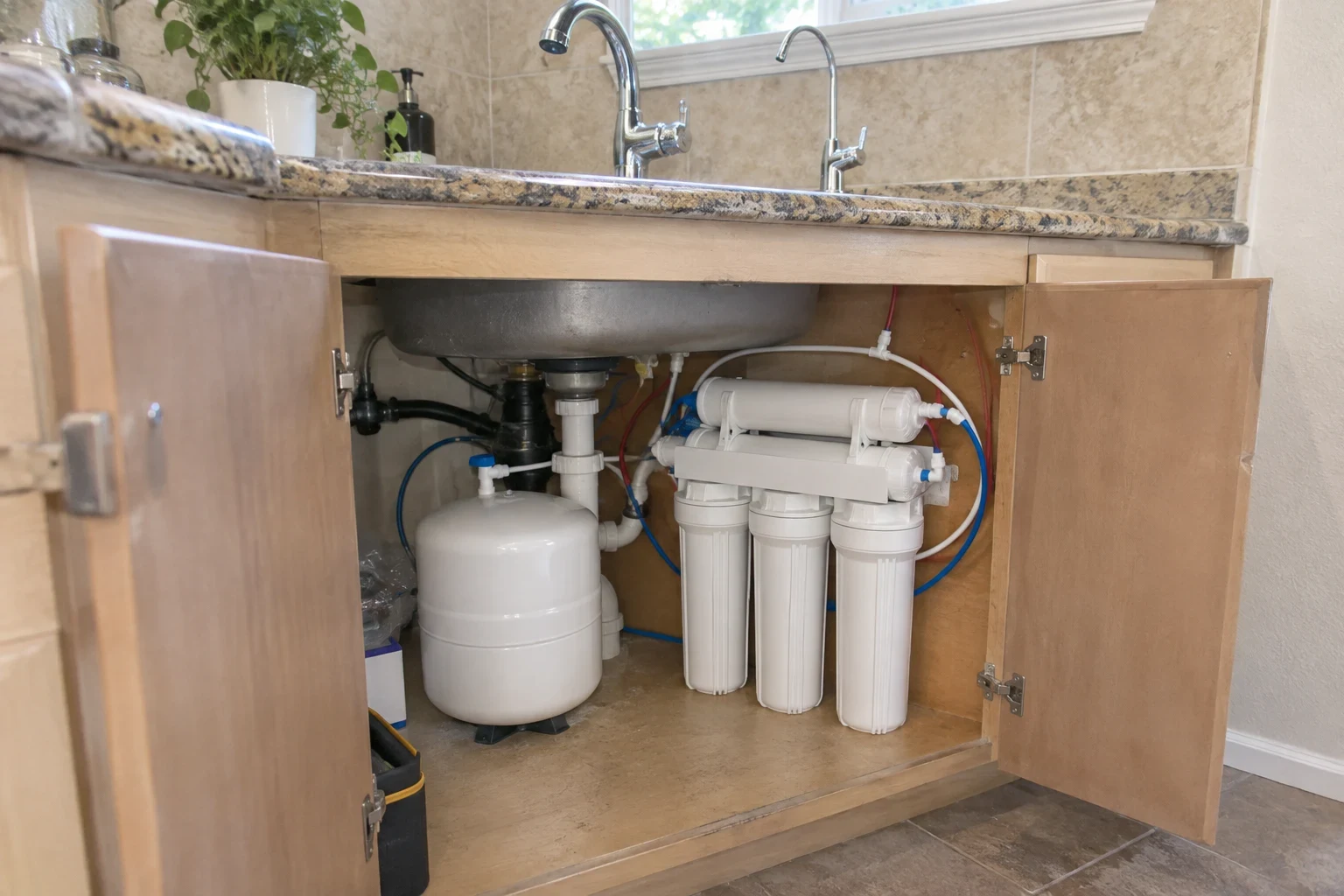
Learn what your water holds before you choose
Your water test is free. We go over the membrane, filter and tank options with you and hand you a clear quote, and installation costs nothing.