ServicesWell Water Filtration
Well Water Filtration and Treatment in Buda
Well water changes from property to property, so we start by testing yours. Then we explain which filter materials fit what we find, what each one handles and what it needs from you over the years, before anything goes on your well line.
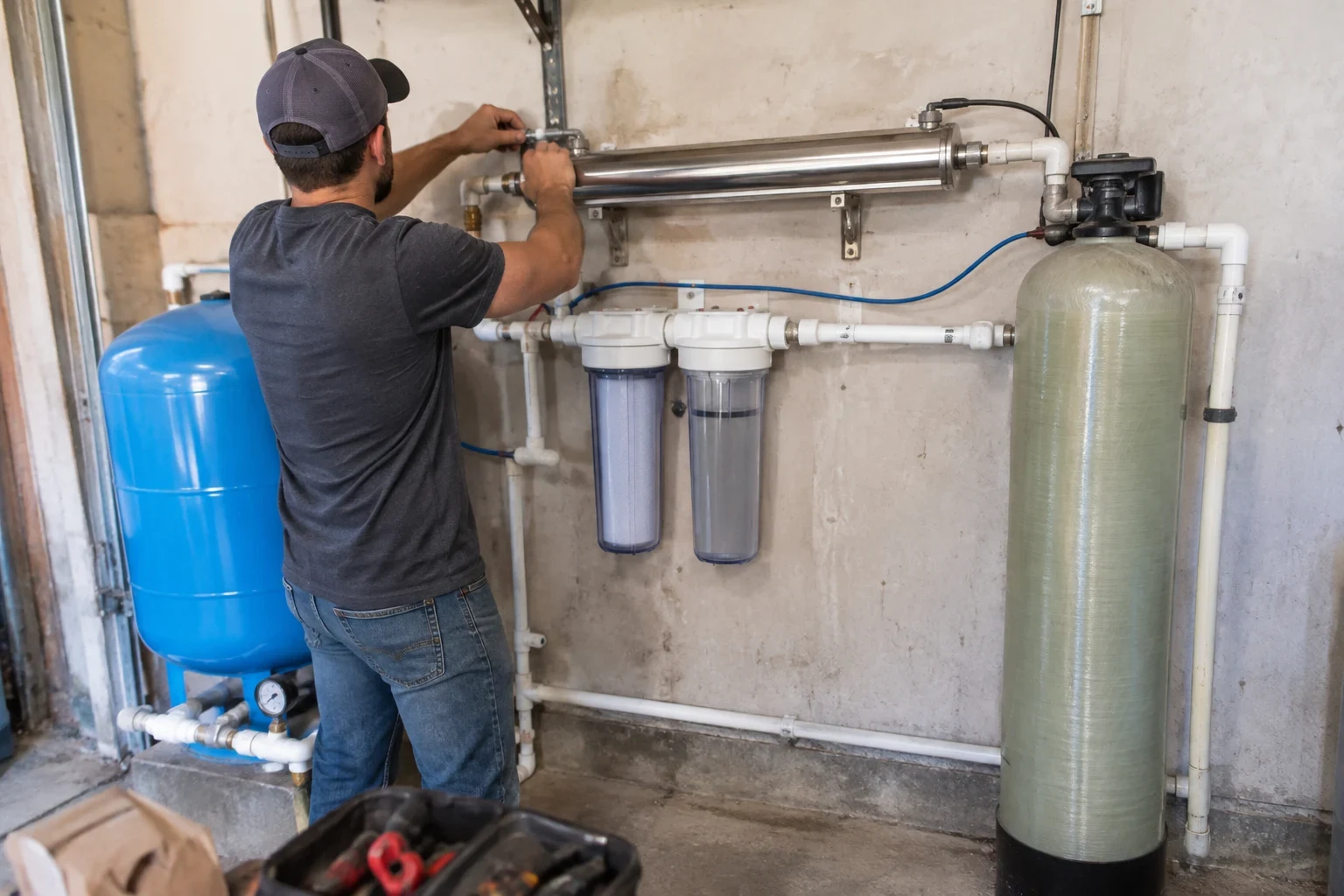
A system built from your results, not a catalog
With a private well, nobody upstream cleans or adjusts the water before you drink it. What flows from your faucets comes down to the rock your well draws from, how deep it reaches and the shape the casing is in. Around Buda that often means hard, mineral-heavy water from limestone, and some wells also carry iron, a sulfur smell or grit after heavy rain.
We build well systems in stages. Each stage uses a material that does one job well: a sediment cartridge catches sand, an oxidizing media holds iron, carbon handles taste and odor, and a UV lamp can follow at the end. The right mix depends on your test, and we walk you through the trade-offs of each material so you know why it is there.
What a well water system can include
- 01
Sediment prefiltration
Spun polypropylene cartridges trap fine sand and silt and cost little to replace. Pleated cartridges hold more dirt and can be rinsed, though they let finer particles through. We pick the micron rating so the filter protects the stages after it without choking your water pressure.
- 02
Iron and manganese media
Media such as Birm or manganese greensand turn dissolved iron into particles the bed can catch and then backwash away. Birm needs no chemical regeneration but wants enough dissolved oxygen in the water; greensand handles heavier loads but needs more upkeep. If iron or sulfur is your main problem, our Iron and Sulfur Removal page goes deeper.
- 03
Activated carbon
Catalytic carbon targets odors and off tastes better than standard carbon, especially a light rotten-egg smell. It sits after the iron stage so rust does not foul it early.
- 04
Hardness control
Limestone wells often run hard. We can pair your filter with a softener or a salt-free conditioner, depending on what the test shows and whether you want to handle salt.
- 05
UV disinfection
A UV lamp inside a quartz sleeve treats water for bacteria without adding chemicals. It only works on clear water, which is why it always goes last, after sediment and iron are removed. See UV Water Purification for more on how it works.
- 06
Fiberglass tanks and bypass valve
Media tanks are fiberglass-reinforced polyethylene that will not rust in a damp pump house. Every system gets a bypass so you keep water while filters are changed.
Questions about Well Water Filtration?
Call(512) 960-1590Signs your well water needs filtering
Orange or brown stains
Rust-colored rings in toilets, sinks and on laundry usually point to iron. Left alone, it also builds up in water heaters and fixtures.
A rotten-egg smell
A sulfur odor, often strongest on hot water, comes from hydrogen sulfide or bacteria in the water heater. Testing tells us which one.
Grit or cloudy water
Sand in aerators or cloudy glasses after storms means sediment is getting through, and it wears out valves and appliances faster.
White crust and spotting
Scale on faucets, glass shower doors and kettles signals hard water.
No test in the last year
Private wells are the owner's responsibility to check. If you cannot remember your last test, or you just bought the property, start there.
How we set up your well system
- 1
Free water test
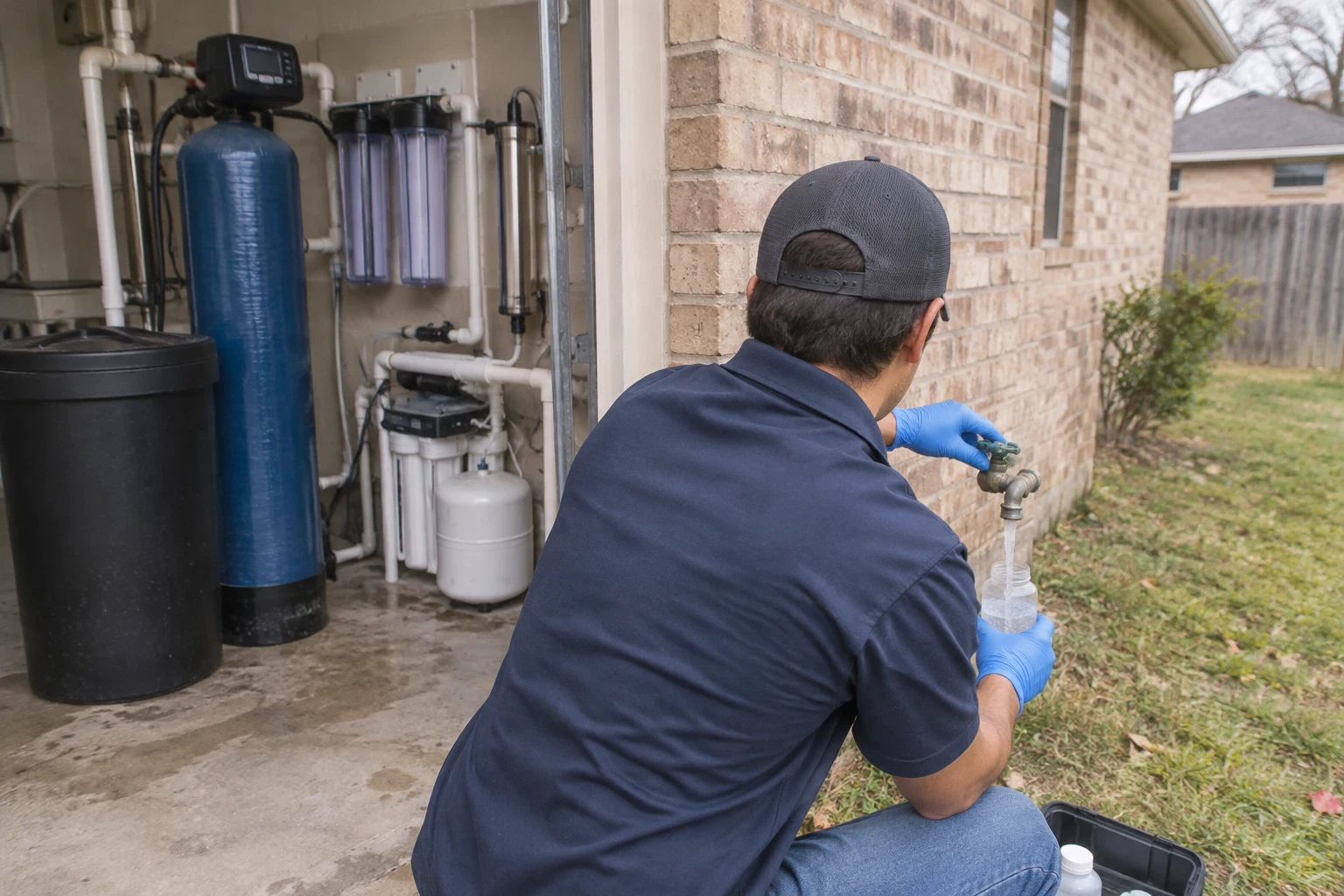
We test for hardness, iron, pH and the other basics at your home. If something calls for a closer look, we explain what our Water Testing & Analysis service checks.
- 2
Material walkthrough
We sit down with you and the results. We explain which media we suggest, what each one costs to maintain and what simpler options exist, so you can choose what fits your budget.
- 3
Pump and pressure check
We note your pump's flow rate and pressure tank so the system is sized right. An undersized iron filter cannot backwash properly, and an oversized one wastes money.
- 4
Installation day
Most systems go in where the line leaves the pressure tank. We lay down covers, install the stages with a bypass, flush the new media and check pressure at a few taps. Installation is free, and we clean up before we leave.
- 5
Your upkeep plan
You get a simple schedule for cartridge changes, backwash settings and UV lamp replacement, written in plain terms.
What affects the cost of well water filtration
Two neighbors with wells a short drive apart can need very different systems. Your price follows what the test finds in the water and how many gallons your family draws each day. After the test, you get a line-item quote at the visit or by phone that shows what each stage costs.
- Number of stages
- A single sediment filter costs far less than a sediment, iron, carbon and UV train. We only add a stage the test supports.
- Media type
- Iron and sulfur media vary in price and in what they need over time, such as backwash water or regeneration.
- Flow rate and tank size
- Larger homes and higher-output pumps need bigger tanks to keep pressure steady.
- Space and plumbing
- A tight pump house, long runs or older pipe can add labor and fittings.
Well water filtration questions
Do I need every stage you described?
No. Plenty of wells only call for sediment filtration and possibly hardness control. Your test decides which stages make sense, and we will say so plainly when a simpler setup is enough.
Will a filter system lower my water pressure?
It should not, as long as the equipment is matched to your pump. When pressure drops, the cause is usually a tank too small for the flow or a cartridge that stayed in too long. We measure your pump's output before choosing equipment, and you get a change schedule so cartridges do not get overdue.
Is UV enough to make my well water safe?
UV handles bacteria and other microorganisms, but it does nothing about iron, hardness or sediment. The lamp also needs clear water to do its job, so it normally sits at the end of the line after filtering rather than taking its place.
How often does the media need replacing?
Sediment cartridges typically get swapped every few months, depending on how much grit your well sends through. Iron and carbon media can last years when backwashing is set correctly, and UV lamps are usually replaced once a year. We give you dates that fit your own setup.
Can I put in a separate drinking water filter after the main system?
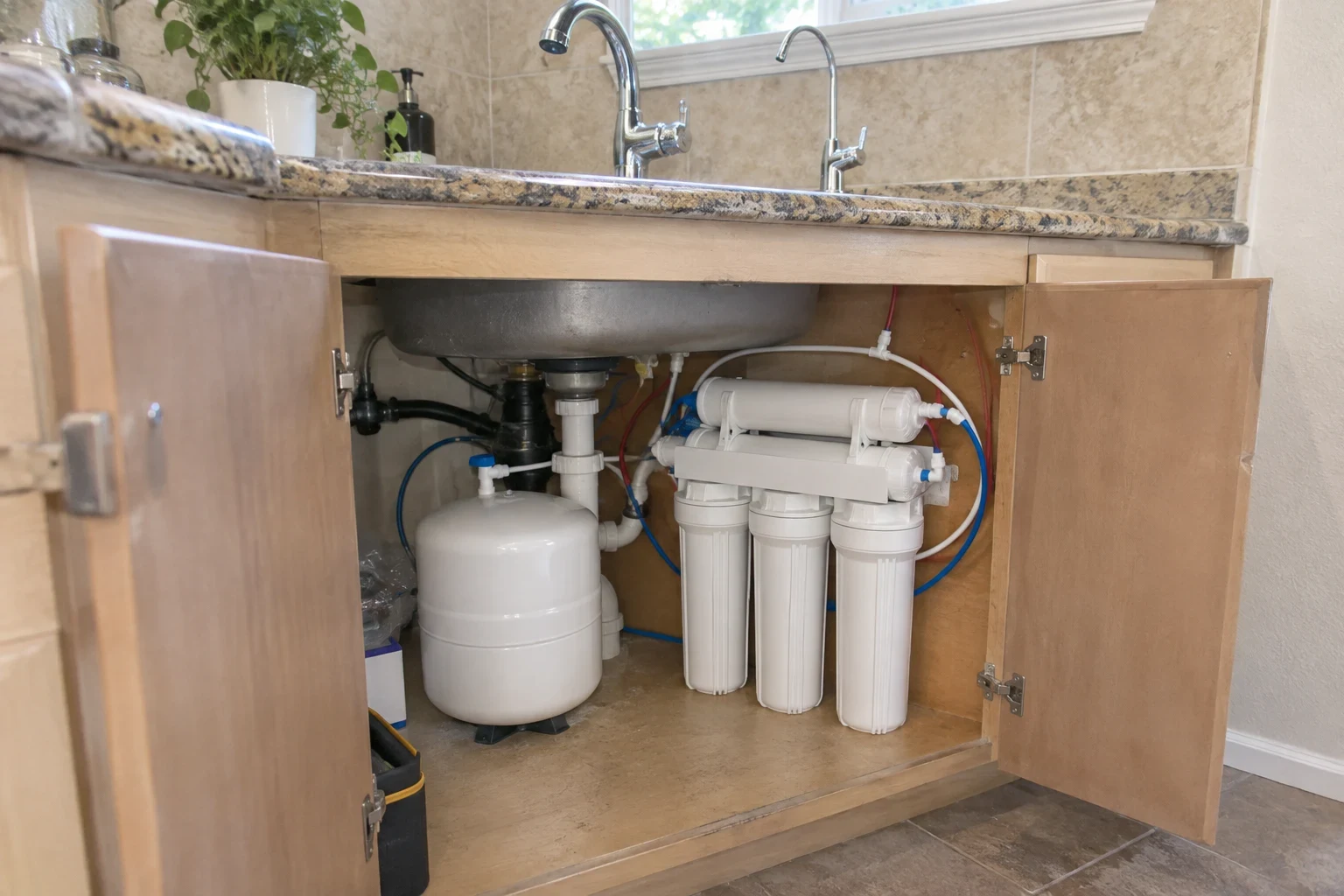
That works well. An under-sink reverse osmosis unit is a common second step once the whole-home stages are running, and the cleaner water feeding it is easier on its membrane. The Reverse Osmosis Systems page covers how the two fit together in your home.
Find out what is in your well
A free test is the honest first step. We will show you the results, explain the material options and give you a quote you can think over.