ServicesUV Water Purification
UV Water Purification in Buda
Ultraviolet light neutralizes 99.9% of bacteria as water passes through a small chamber on your main line. Nothing is added to your water and nothing changes its taste. We test first, then size a system to your home's flow so it works every time a tap opens.
How UV Treatment Works, and Who It Suits
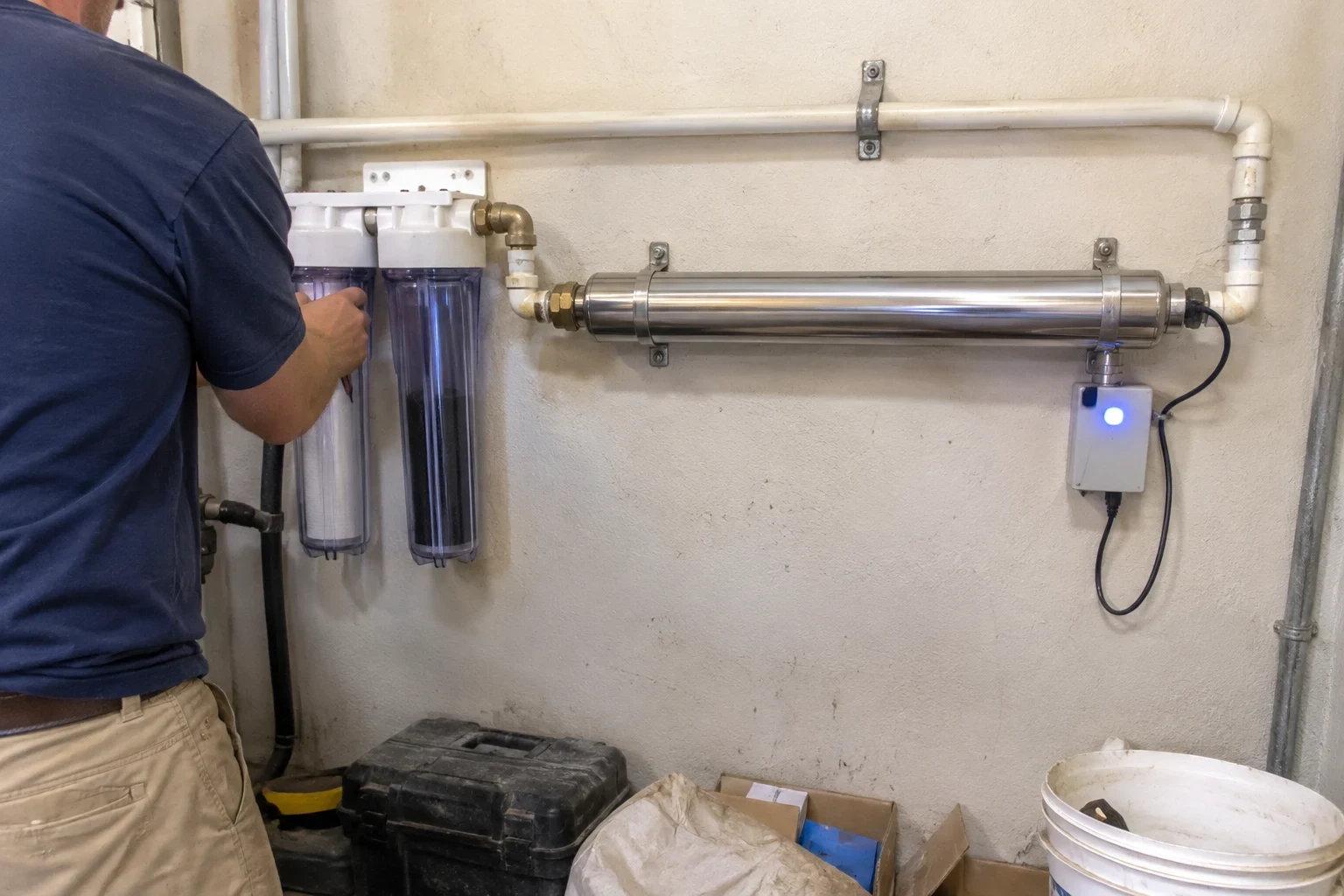
Inside every UV unit is a lamp sealed in a clear quartz sleeve, all housed in a stainless steel chamber on your main water line. Water flows around the sleeve, and the ultraviolet light neutralizes 99.9% of bacteria. Once that happens they can't multiply, and a germ that can't multiply can't make anyone sick. That is the whole job. UV does nothing about chlorine, minerals, lead or sediment, which is why it's usually paired with other equipment instead of standing alone.
Homeowners tend to call us about UV when they want an extra layer of protection against germs. Maybe a boil-water notice left you uneasy, someone in your home has a weakened immune system, or a lab test turned up bacteria. If what really bugs you is taste, odor or scale buildup, whole-home filtration or a salt-free water conditioner is a better place to start, and we'll say so up front.
What Goes Into a UV Installation
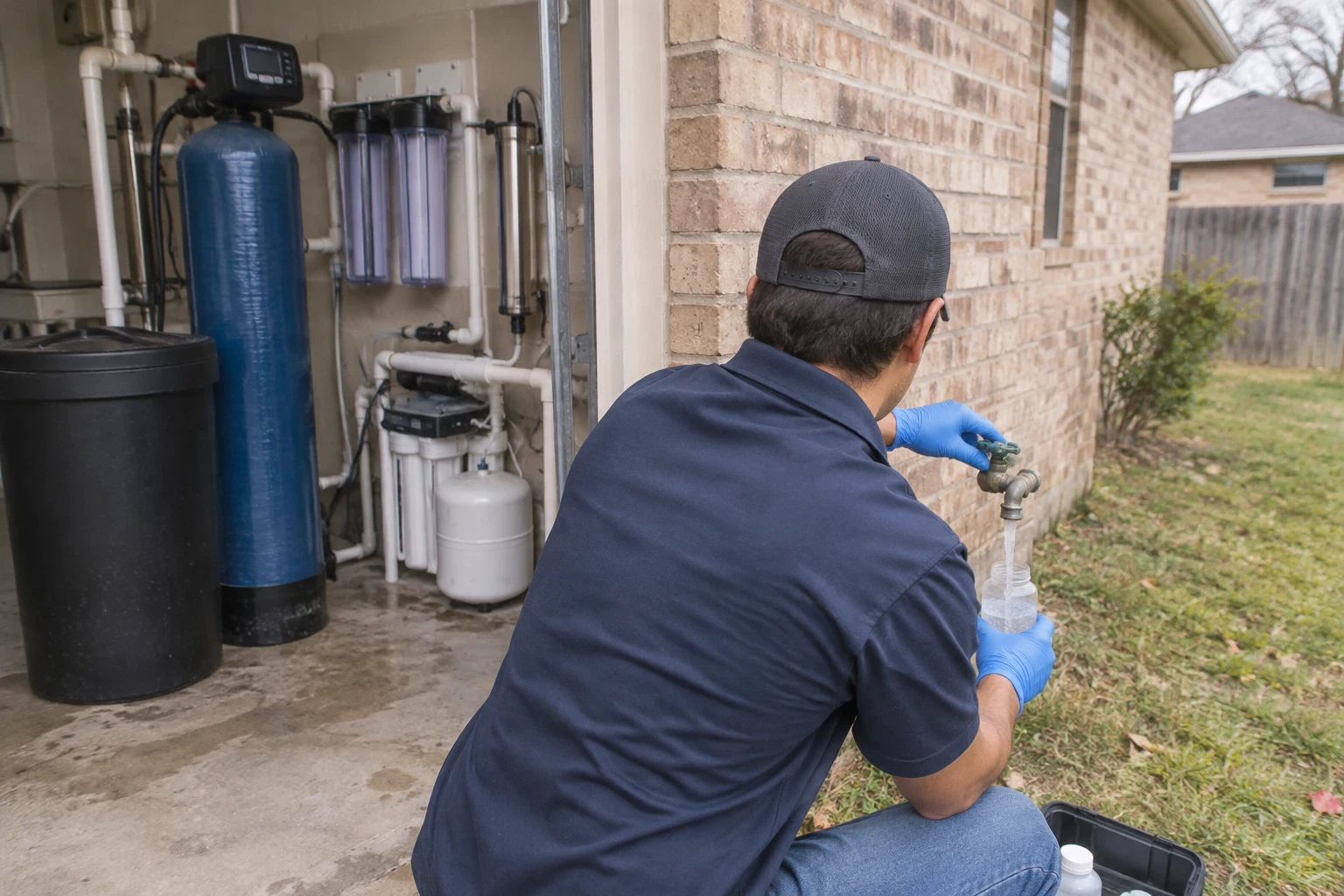
A water test before anything else
We check hardness, iron, turbidity and bacteria. Minerals and cloudiness can coat the quartz sleeve or shade microbes from the light, so these numbers decide what goes in front of the UV unit.
Sediment pre-filter
UV only works on water it can see through. A 5-micron sediment filter ahead of the chamber catches particles that could hide bacteria, and it protects the sleeve from grit.
Lamp and chamber matched to flow
Systems are rated in gallons per minute. We size for your peak demand, like a shower and the dishwasher running together, so water never moves faster than the lamp can treat it.
Your choice of lamp type
Low-pressure mercury lamps are the proven standard and cost less up front, but they need a yearly lamp change and a few minutes to warm up. LED units turn on instantly and last longer, with a higher price and fewer whole-home sizes available. We'll walk you through both.
Controller and alarm
Every system we install has a controller that sounds an alarm if the lamp fails. Some models add a UV intensity sensor that warns you when the sleeve needs cleaning, which we recommend for homes with harder water.
Bypass valve and cleanup
A bypass lets you service the unit without shutting off water to the house. We leave the work area clean and show you how to read the controller.
Signs UV Treatment Is Worth a Look
- A test found bacteria
- If a lab result shows coliform or E. coli, UV is one of the most reliable ways to treat it continuously at the point where water enters your home.
- Boil-water notices worry you
- Notices are rare, but some families want ongoing protection that doesn't depend on hearing an alert in time.
- Someone at home is vulnerable
- Newborns, older relatives and anyone undergoing treatment that lowers immunity are more sensitive to waterborne germs.
- You store or reuse water
- Homes that collect rainwater or keep a storage tank often add UV to treat what grows while water sits.
- You want no added chemicals
- UV disinfects without chlorine or other additives, so it doesn't change how your water tastes or smells.
How Your UV Project Runs
- 1
Free water test
We sample your water and go over the results with you in plain language, including whether UV actually solves the problem you're worried about.
- 2
Pick the setup
We explain the lamp, sleeve and pre-filter options and what each costs to own over time. You get a written quote by phone before any work is scheduled.
- 3
Installation day
Most installs take a few hours. We mount the pre-filter and chamber near your main line, add a bypass and plug the controller into a nearby outlet. Water is off only briefly.
- 4
Sanitize and verify
New plumbing downstream can hold bacteria, so we flush and sanitize the lines, then confirm the lamp and alarm work before we leave.
What Shapes the Cost of a UV System
We offer free installation, so your quote mostly reflects the equipment and any prep your water needs. The biggest swings come from flow rate and what has to happen before the light. Ongoing costs are small but real, and we'll lay them out up front.
- Flow rate
- A larger home with more bathrooms needs a bigger chamber and stronger lamp to keep up at peak use.
- Pre-treatment needs
- High hardness or iron can foul the sleeve within weeks. If your test shows either, a conditioner or iron filter ahead of the UV unit adds to the project but keeps it working.
- Lamp technology
- Mercury lamps cost less to buy and need annual replacement. LED units cost more up front and less over the years.
- Monitoring features
- A basic lamp-failure alarm comes standard. A UV intensity sensor costs more and tells you when the sleeve is dirty.
UV Purification Questions
- Will UV change how my water tastes?
- No. The light treats the water as it flows by, but it adds nothing and removes nothing, so the flavor you have today is the flavor you'll have afterward. If chlorine is the taste that bothers you, a carbon stage from our whole-home filtration options takes care of it, and the two systems work well together.
- How often does the lamp need replacing?
- Plan on a new mercury lamp about once a year, even if it still lights up, because its UV output drops over time. LED models last longer between changes. We'll set up a reminder schedule with you and can show you how to swap the lamp yourself if you'd like.
- Do I still need a filter if I have UV?
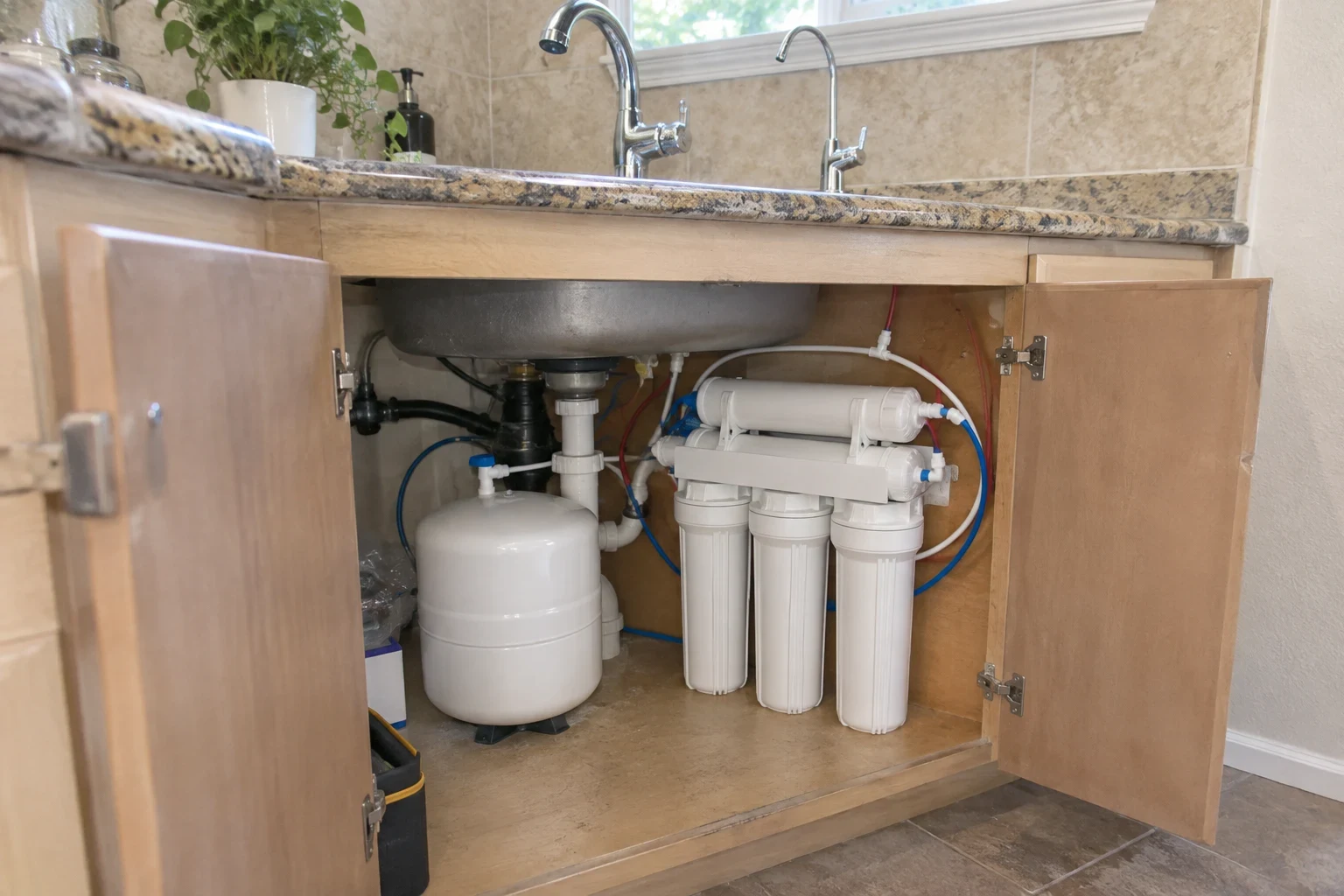
- Yes. A sediment pre-filter keeps particles from shielding bacteria from the light. For lead or other dissolved contaminants at the kitchen tap, a reverse osmosis system is the right tool.
- Does a UV system use much electricity?
- Very little. A typical whole-home unit draws about what a single light bulb does. The lamp stays lit even when no tap is open, so it's already at full strength the moment water starts moving through the chamber.
- What happens during a power outage?
- The lamp goes dark, so any water flowing through during that time isn't treated. Once power is back, mercury lamps need a short warm-up. Some homeowners add a solenoid valve that stops flow whenever the lamp is off, and we're happy to talk through that option with you.
Find Out If UV Is Right for Your Water
We'll test your water at no cost and tell you honestly whether UV belongs in your setup, or whether another system fits better.