ServicesWater Testing & Analysis
Water Testing & Analysis in Buda
Picking a filter is much easier once the numbers are on the table. We check your water at your kitchen sink at no charge, walk through each reading with you, and point out which filter materials would make a real difference and which would not earn their cost.
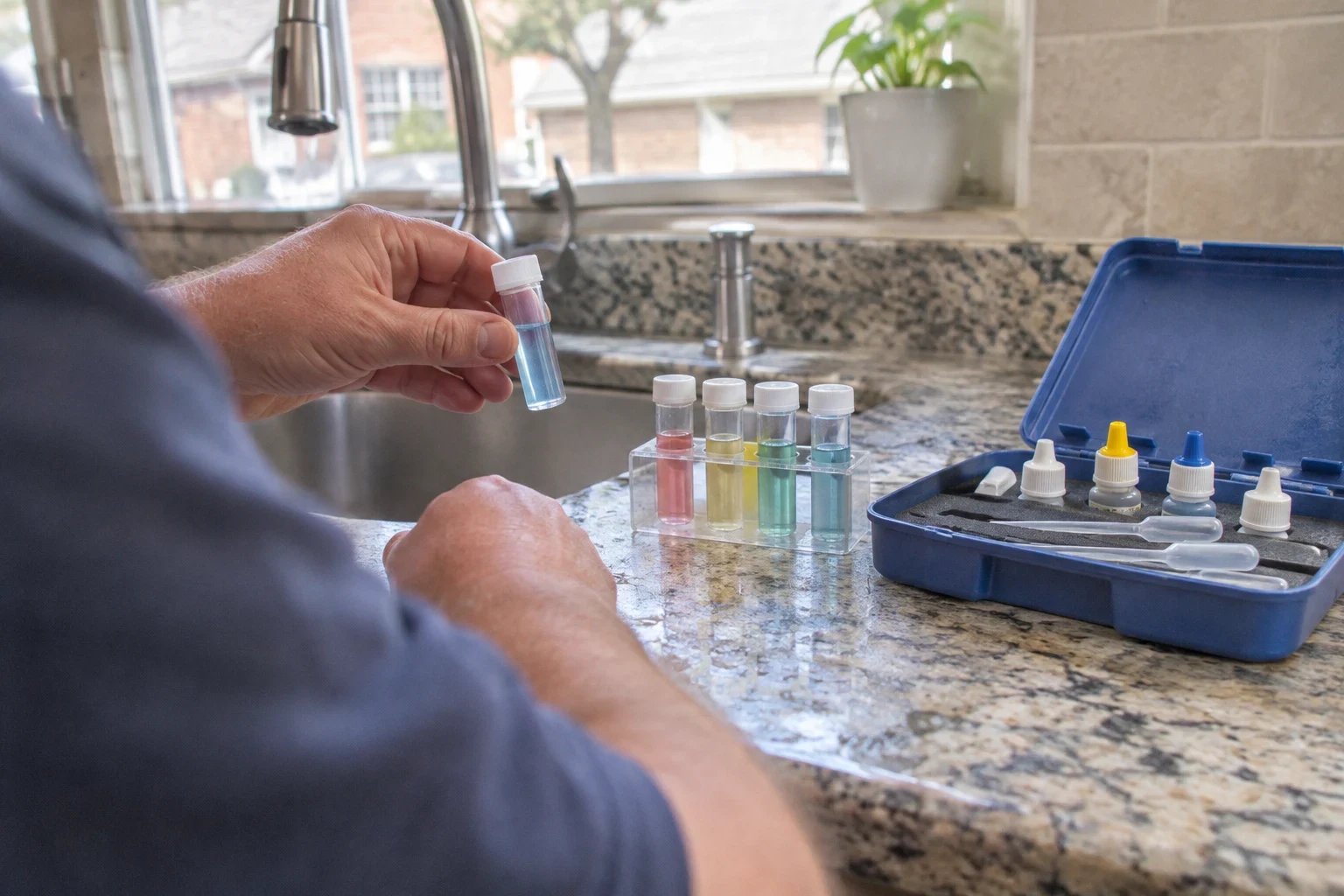
Know your water before you pick a system
Water testing is where every good treatment decision starts. We measure hardness, chlorine, iron, pH and total dissolved solids right at your kitchen sink, then sit down with you and explain what each result means for your home.
The results matter because filter materials are not interchangeable. Catalytic carbon handles chlorine and chloramine taste. Softener resin pulls out hardness minerals but adds a small amount of sodium. A reverse osmosis membrane catches dissolved solids and lead, though it sends some water down the drain. Salt-free conditioning media changes how scale forms instead of removing the minerals. Matching the material to your numbers is how you avoid paying for a system you do not need.
Hardness and scale are common questions around Buda, so a test turns that worry into a real number you can act on.
What your test covers
- Hardness, in grains per gallon
- We measure calcium and magnesium and give hardness in grains per gallon, the figure used to size softeners and conditioners. That single reading shows whether a water softener, a salt-free conditioner or neither fits your home.
- Chlorine or chloramine
- City water gets disinfected, which is good, but that disinfectant is the top reason people dislike their tap's taste and smell. The level tells us if standard carbon will do or if catalytic carbon is the smarter pick.
- Iron and any sulfur smell
- Orange stains and a rotten-egg odor have separate causes. We test iron and note any sulfur smell at the tap, since both need oxidizing media instead of a simple sediment cartridge.
- pH and dissolved solids
- pH affects how long pipes and fixtures last and how certain media work. Total dissolved solids gives a fast overview of what's in the water and shows if reverse osmosis would noticeably improve your drinking water.
- Your results in writing
- Your readings stay with you on paper, each with a note on what it means and which materials would deal with it. If your water checks out fine, we tell you.
- Lab work when it makes sense
- Lead, bacteria and some specific contaminants call for an outside lab, not an in-home kit. We explain when that's worth it and help you send off a sample.
Signs it is time to test your water
White crust that keeps coming back
Mineral buildup on faucets, showerheads and glass doors that returns days after cleaning usually points to hardness. A test shows how much, which decides the right equipment and its size.
Water that smells like a pool
A strong chlorine taste or smell at the tap is easy to fix once we know the level. It often leads people to drink bottled water they would rather not buy.
Rust stains or a rotten-egg smell
Orange rings in toilets and sinks, or a sulfur odor from hot or cold taps, need testing before choosing a fix. Iron and sulfur respond to different media.
Spotty dishes and stiff laundry
Cloudy glasses and towels that feel scratchy are everyday signs of mineral-heavy water. They also mean soap and detergent are working harder than they should.
Older plumbing or a new-to-you home
If your home has older pipes or you just moved in, a baseline test shows what you are starting with. It is also smart before replacing an aging filter you inherited with the house.
How a test visit works
- 1
A quick call to set it up
You tell us what you are noticing, whether that is taste, stains or scale, and we pick a time that suits you. Those details tell us which checks to focus on.
- 2
Samples at your tap
We draw water from the kitchen faucet and, if you already have a filter, from a point before it too. Comparing the two shows whether your current equipment is doing its job.
- 3
Results at your kitchen table
We go through each reading in plain terms and write it down for you. You can ask as many questions as you like.
- 4
Options with the trade-offs laid out
If treatment makes sense, we compare the materials side by side: what each removes, how often media or filters need changing, and what it costs to run. You get a quote by phone or in person and decide in your own time.
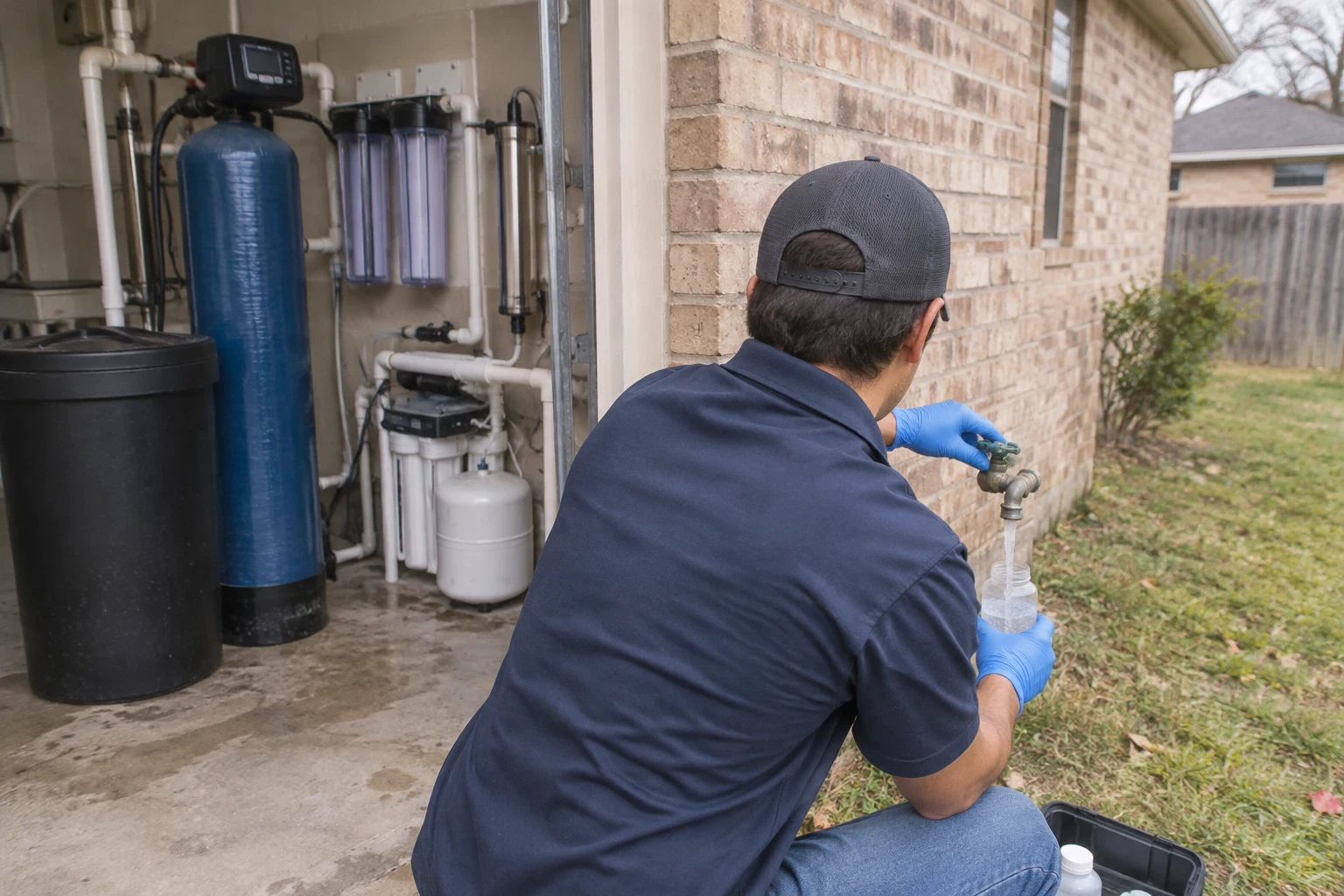
What affects the cost of water testing
The in-home water test is free, with no obligation to buy anything. Costs only come in if you want lab work beyond what we can measure at the sink, and we tell you the price before any sample goes out. If you choose a system afterward, installation is free.
- Which contaminants you want checked
- Lead, bacteria and specialty panels each require different lab work. A single targeted check costs less than a broad panel, so we help you pick only what your situation calls for.
- How many samples are taken
- Testing one tap is simplest. Comparing before and after an existing filter, or checking several fixtures, adds samples when lab work is involved.
- Follow-up testing
- Some people like a retest after a new system goes in to confirm it is performing. We can repeat the in-home checks so you see the difference in numbers, not just taste.
Questions about water testing
Something not covered here? (512) 960-1590
Does the water test truly cost nothing?
It does. The in-home test and the review of results are free, and you owe us nothing after. The only charge is for optional outside lab work, and you hear that price up front.
Will you push a softener on me?
Only if your readings call for one. With moderate hardness, a salt-free conditioner may fit better, and if taste is your only issue, a carbon filter could be enough. Sometimes the truthful answer is that your water is fine as it is.
How long will the visit last?
The test itself goes fast. Most of the time goes to reviewing results and answering your questions, so expect to sit with us for a while. Lab results, if you want them, take longer depending on the panel.
Isn't a test strip from the store just as good?
Strips show rough ranges and work as a first glance. They're less exact on hardness and iron, the very readings used to size equipment. A wrong reading can lead to a system that's undersized or one you never needed.
Do you check for lead?
Lead tends to come from older plumbing and fixtures inside the home rather than the supply, and measuring it accurately takes a lab. We can show you how to collect a proper first-draw sample and help get it sent out. If lead turns up, a reverse osmosis system at the kitchen sink is a common fix for drinking water.
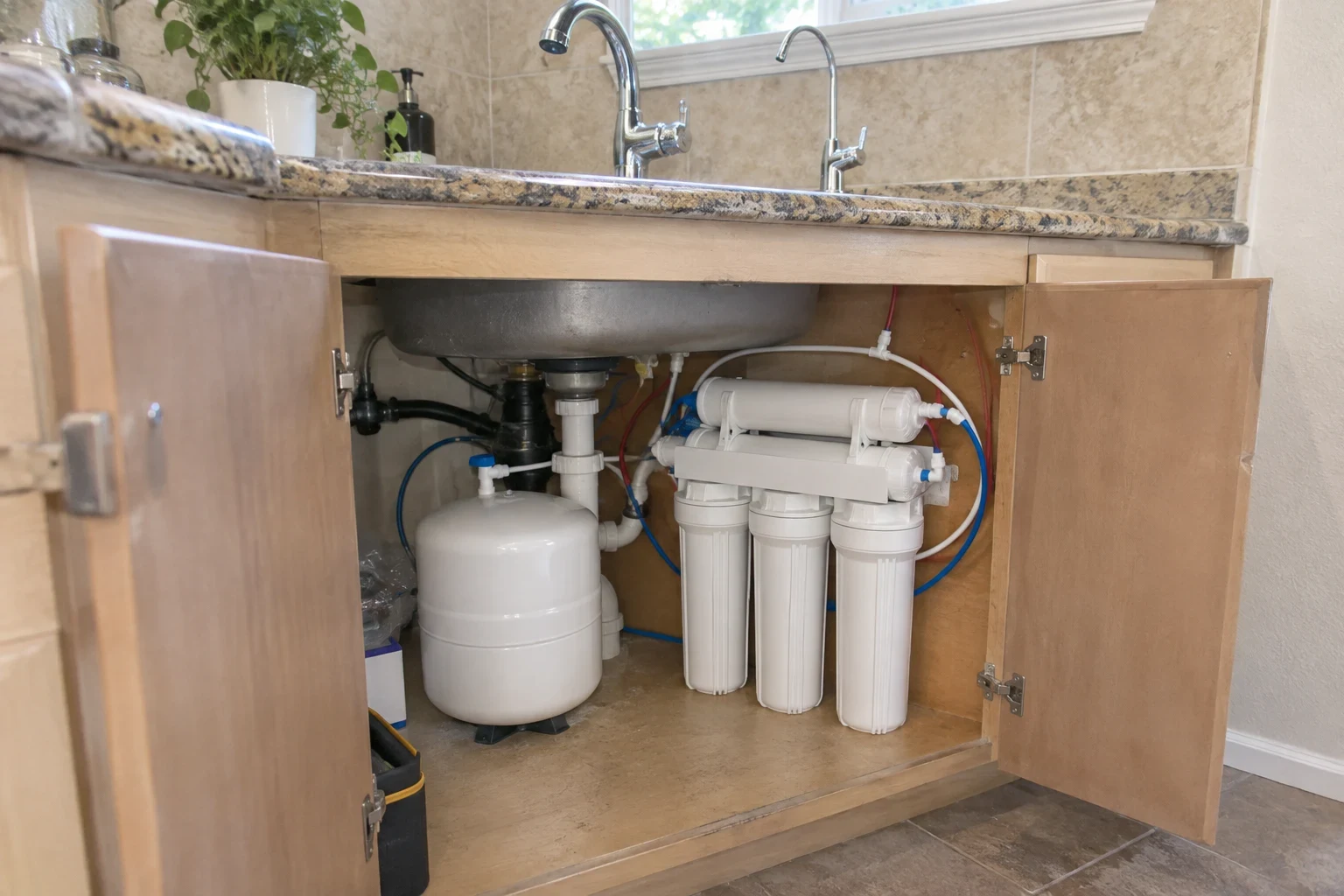
Get real numbers for your tap water
A short phone conversation is all it takes to schedule a free test in your home, followed by a clear rundown of what we found. If equipment comes up, we can give you a quote during the same visit.