ServicesSalt-Free Water Conditioners
Salt-Free Water Conditioning in Buda
A salt-free conditioner stops hard-water minerals from clinging to your pipes, fixtures and water heater, with no salt bags and no brine. We test your water first, explain the media choices simply and install the system that fits your home.
What a Salt-Free Conditioner Does, and What It Doesn't
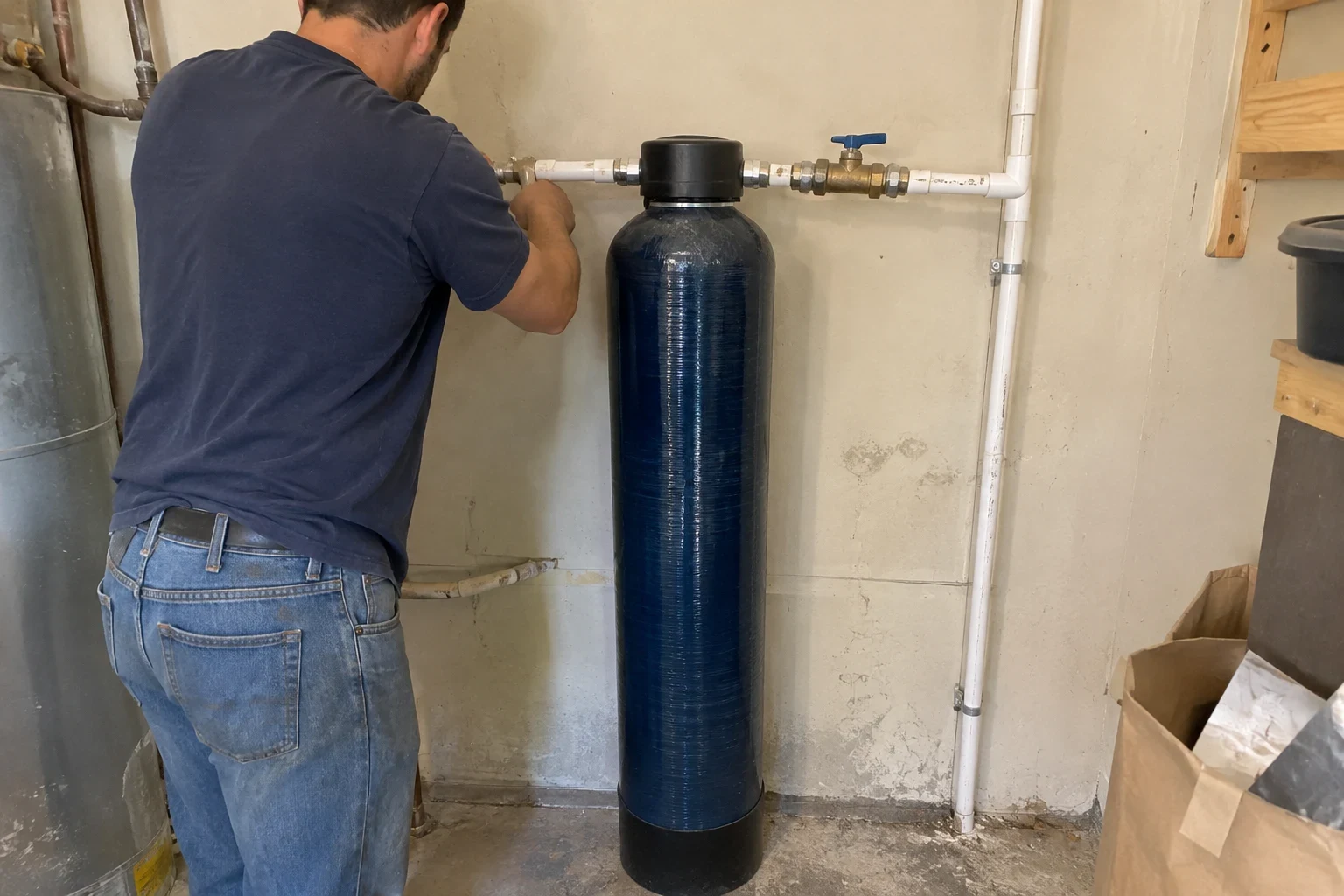
A salt-free conditioner doesn't pull calcium and magnesium out of your water the way a softener does. Most use a media called template-assisted crystallization, or TAC. As water flows through the tank, the media turns dissolved hardness into tiny crystals that stay suspended and wash through instead of bonding to metal and glass. You keep the minerals. You lose most of the crusty buildup.
That trade-off matters, so we say it up front. Your water won't feel slippery like softened water, and you may still see some spots on glass shower doors. In exchange, you get no salt to carry, no brine discharge and no regeneration cycle using water at night.
Hard water is common across Central Texas, so scale is a real concern for many homes. If your test shows very high hardness, or you want that soft-water feel, we'll tell you plainly that our water softener installation may suit you better.
What Your Installation Includes
- 01
A water test before anything else
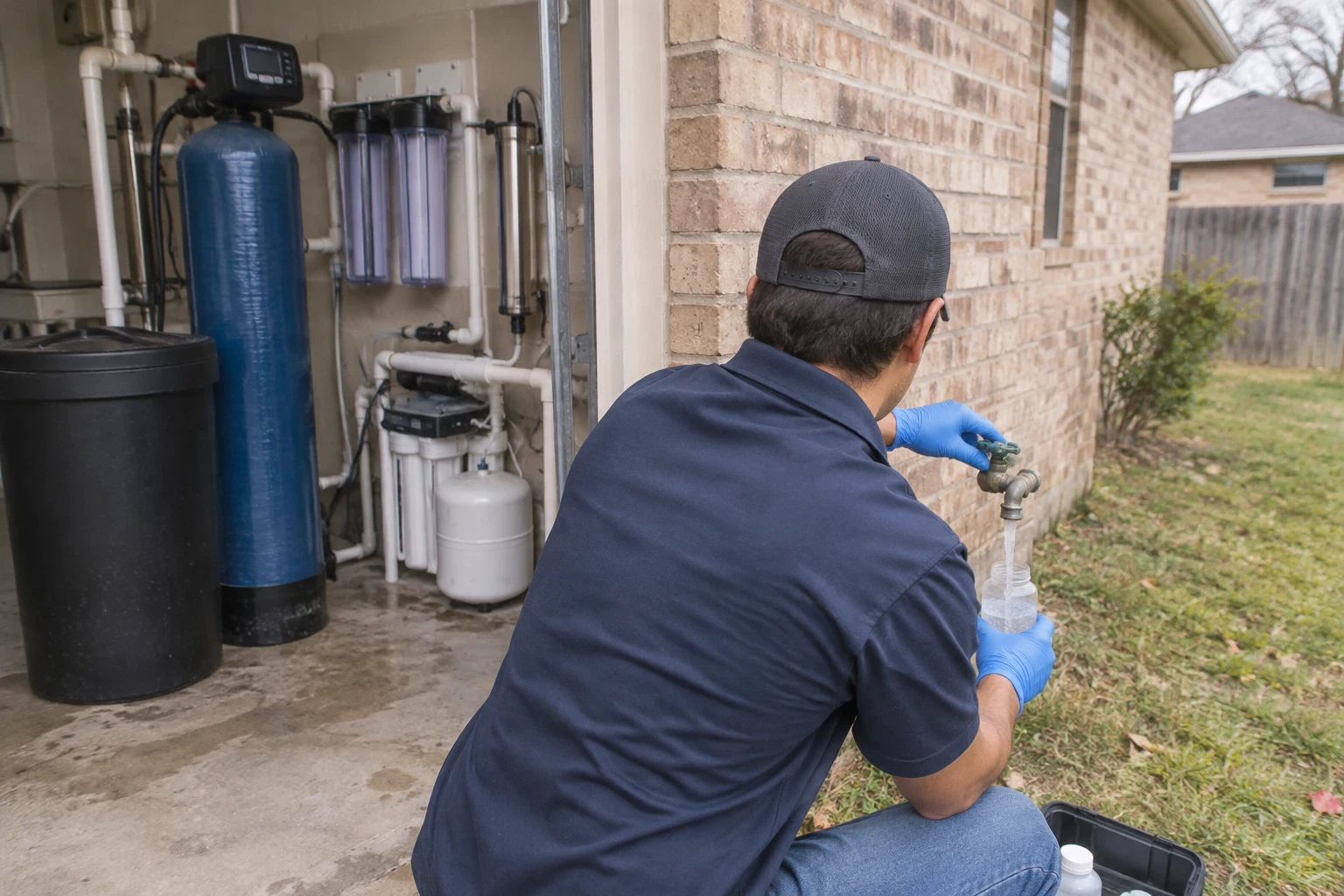
We check hardness, chlorine and iron at your tap. Those numbers decide whether a conditioner makes sense and how large it needs to be.
- 02
Media chosen for your water
TAC ceramic media handles scale for the whole house. Polyphosphate cartridges are a simpler, smaller option for protecting a single water heater or appliance. We show you both and explain where each falls short.
- 03
A carbon or sediment prefilter when needed
Chlorine and iron can coat TAC media and shorten its life. If your test shows either, we add a prefilter ahead of the conditioner so the media keeps working the way it should.
- 04
Tank, valve and bypass
The media sits in a fiberglass-reinforced polyethylene tank that won't rust. We install a bypass valve so you can isolate the system for service without shutting off water to your home.
- 05
Clean connections at the main line
We tie in where your main enters, usually in the garage or at an exterior loop, using fittings matched to your existing pipe. We clean up and leave the area as we found it.
Questions about Salt-Free Water Conditioners?
Call(512) 960-1590Signs a Salt-Free Conditioner Could Help
White crust on faucets and showerheads
That chalky ring is calcium. If you're scrubbing or soaking fixtures every few weeks, scale control will slow it way down.
Crackling sounds from the water heater
Hardness minerals collect as a layer of sediment on the floor of a tank heater, and you hear it snap when the burner kicks on. Slowing new buildup lets the heater do its job with less strain.
You'd rather not haul salt
Salt bags are heavy, and someone has to remember them. A conditioner has no brine tank to refill.
Concerns about brine discharge
Some homeowners prefer not to send salty regeneration water into a septic system or down the drain. A salt-free system has no discharge at all.
Someone in the house watches sodium
Softeners add a small amount of sodium to water. A conditioner adds none, which some families prefer.
How the Work Goes
- 1
Phone call and free water test
You tell us what you're seeing, and we set a time to test your water. We go over the results with you at the kitchen table, not in a sales pitch.
- 2
Options in plain language
We walk through the media types, whether you need a prefilter and how much replacement media will cost down the road. You get a clear quote before you decide.
- 3
Installation day
We shut off water briefly, cut in at the main, mount the tank and bypass, then flush the new media. Most homes are back to full water service the same visit.
- 4
Check and walkthrough
We test for leaks, show you how the bypass works and explain when the media and any prefilter will need attention.
What Sets the Price
Installation is free, so most of what you pay is for the equipment. We size the conditioner to your home's busiest water use, and that along with your test sets the quote. You'll have the figures by phone or in person before we start any work.
- How big your home is
- Extra bathrooms raise flow during busy hours. A bigger tank with more media keeps pace without a pressure drop.
- Whether a prefilter is needed
- When the test turns up chlorine or iron, a carbon or sediment prefilter adds to the cost but shields the media you're buying.
- Kind of media
- Whole-house TAC media is priced above a single polyphosphate cartridge, but it protects every tap and appliance, not just one.
- Connecting to your plumbing
- A loop already in place means an easy hookup. Cramped spots or older pipe needing more fittings add time and materials.
Salt-Free Conditioner FAQ
Is a conditioner just another name for a softener?
No. A softener takes hardness minerals out with salt and resin. A conditioner keeps the minerals in the water but alters them so they don't stick as scale. For water that feels soft, a softener suits you better, and we'll gladly explain both.
Will spots still show up?
Likely a few, mainly on glass and dark finishes. Since the minerals remain, drying droplets can leave a light mark. The change is that spots wipe right off rather than hardening into crust.
Does it use power or waste water?
Most TAC systems run without electricity and never backwash or regenerate. Water just passes through the tank on the way to your taps.
When does the media need to be replaced?
That hinges on how much water you use and what it contains. The media typically lasts several years, and a prefilter cartridge gets changed more often. Once we test, you'll get a realistic schedule for your house.
Is it good for a tankless water heater?
Tankless heat exchangers suffer from scale, so cutting buildup helps. Look at your heater's manual as well, because some manufacturers set specific requirements, and we'll go over them with you.
Find Out If Salt-Free Is Right for Your Water
A quick test tells us how hard your water is and whether a conditioner, a softener or a simple filter makes the most sense. We'll explain the options and leave the choice with you.