ServicesWater Softener Installation
Water Softener Installation in Buda
We install water softeners sized from a test of your own water, not a guess. Before anything goes in, we explain the resin, the control valve and the salt choices in plain terms, so you know what is going into your home and why.
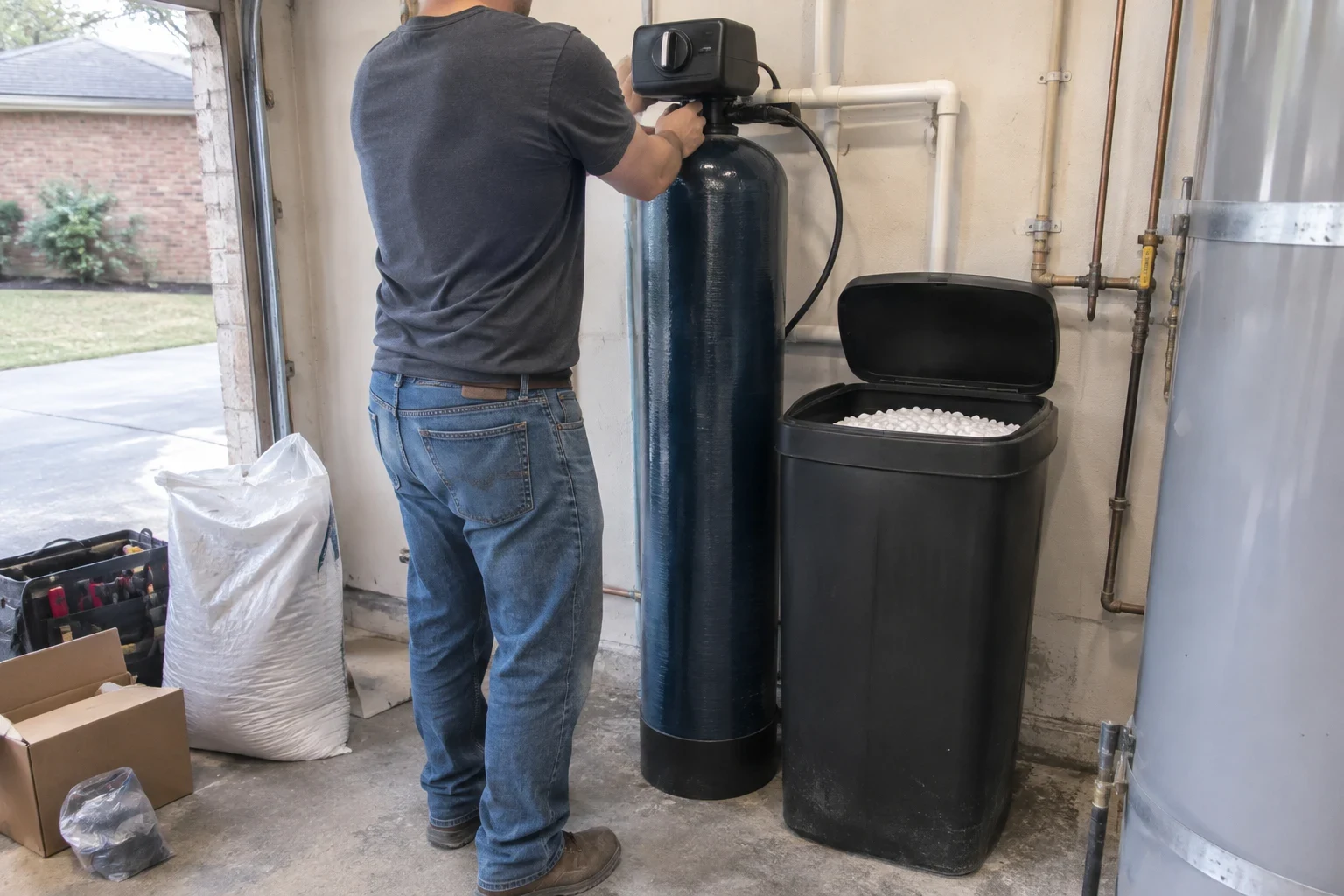
When a softener makes sense
As water moves through a bed of resin beads, a softener trades its calcium and magnesium for sodium or potassium. That ends the white crust on fixtures, the spots on glasses and the scale in your water heater. A lot of the water near Buda passes through limestone, which is why hardness brings many people to us.
Even so, a softener is only worth it when your water is truly hard. That's the reason we test before anything else. If the readings favor a salt-free conditioner or a filter, we'll say so, and our Salt-Free Water Conditioners and Whole-Home Filtration pages explain more.
When a softener does fit, the parts inside it are the decisions that count. We go through each one with you so your system matches your water and how your family uses it.
What goes into a softener install
- Checking your water first
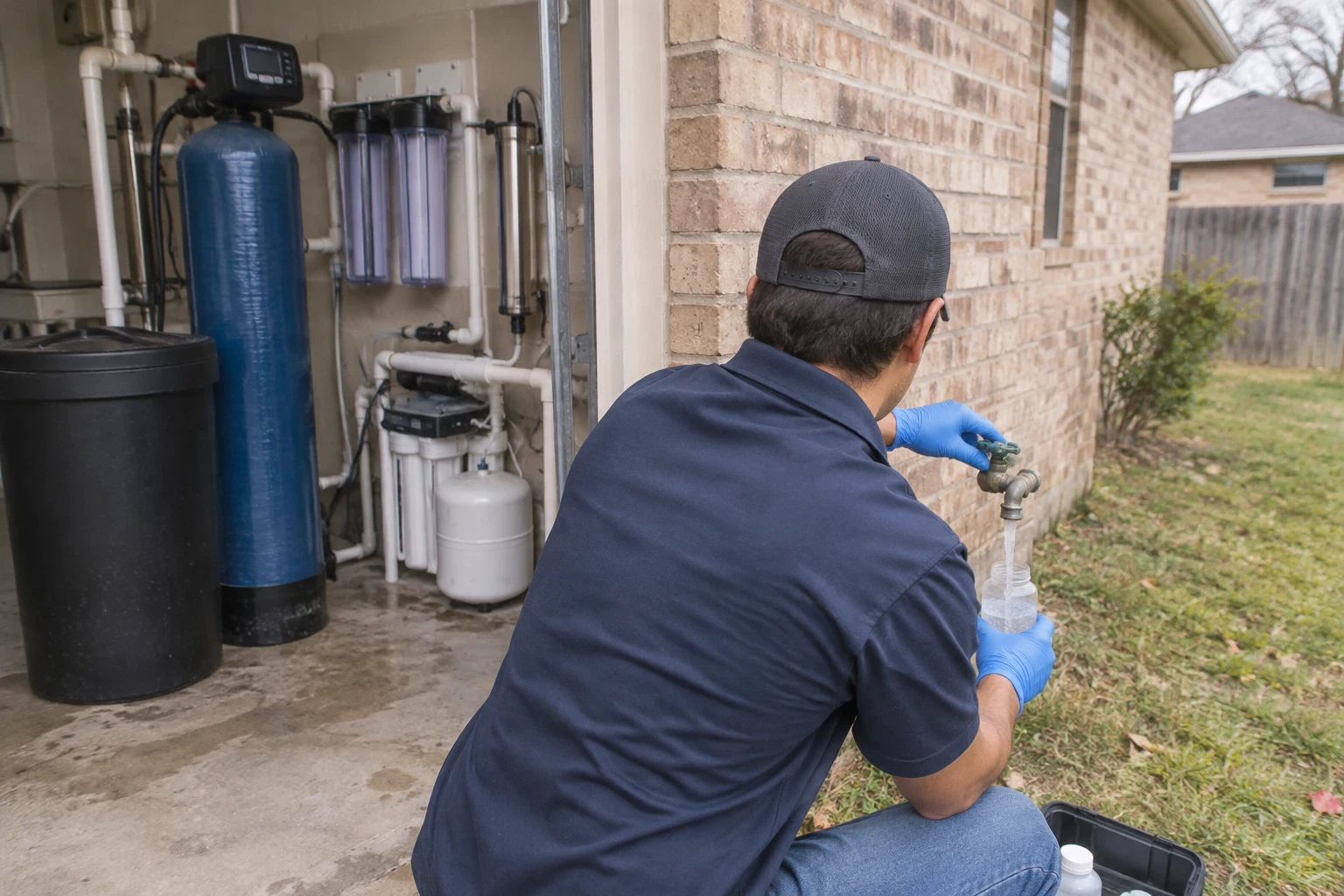
- Before choosing any parts, we look at your water's hardness along with any iron or chlorine, because each one changes which resin and settings make sense. We go over the numbers with you right there in your kitchen.
- Resin chosen for your water
- Standard 8% crosslink resin suits most water. For chlorinated city water we often recommend 10% crosslink, since chlorine gradually wears down softer beads and the tougher grade lasts longer. When a little iron is present, fine mesh resin is worth considering.
- Tank and control valve
- Your resin goes in a fiberglass-reinforced polyethylene tank that cannot rust. We favor a metered, demand-based valve over a plain timer, because it only regenerates after a set amount of water has been used and goes through less salt.
- Bypass, drain and connections
- A bypass valve lets you take the softener out of service without shutting off water to the whole house. We give the drain line a proper air gap and use fittings that match your existing copper, PEX or CPVC.
- Setup and a salt walkthrough
- We set the valve for your hardness and the number of people at home, add salt to the brine tank and show you how to check it and how to use the bypass.
Clues your home needs softer water
Chalky buildup on fixtures
The white rings on aerators, showerheads and faucet bases are calcium left over every time water dries.
Hazy glasses and spotted dishes
When glasses come out of the dishwasher cloudy despite rinse aid, hard water is usually to blame.
Soap that won't lather
Calcium and magnesium latch onto soap before it can lather. Shampoo and detergent get used up faster, and a dull film stays behind after rinsing.
A crackling water heater
Heated water drops its minerals, which form a crust on the bottom of the tank that pops when the burner or element turns on. That layer makes the heater work harder and cuts its life short.
Rough, faded laundry
Scratchy towels and colors that fade fast are often a sign of minerals stuck in the fabric.
How the day goes
- 1
Test and talk
The visit opens with your free water test and a look at the results together. From there we put the resin, valve and salt options side by side and explain what you gain or give up with each.
- 2
Pick the spot
In most homes the softener ends up in the garage close to where the main line comes in. We want level ground, a drain within reach and a regular outlet to power the valve.
- 3
Install and protect
Drop cloths go down first, then we close the main and tie the softener and its bypass into your water line. You are only without water for part of the visit, not the whole time.
- 4
Program, test and clean up
We set the valve, run the first regeneration and test the softened water so you can see the difference for yourself. Before we go, we take the packaging with us and leave the space the way it was.
What moves the cost
Installation is free, so your price mostly reflects the equipment your water calls for. Once your free test is done, we give you a written quote by phone that lists every part, so you know exactly what you are paying for before any work starts.
- Your hardness and your headcount
- Harder water carries more minerals in every gallon, and each extra person adds to daily use. Together those two numbers set how much resin capacity you need, and a larger tank costs more.
- Resin grade
- Standard resin is the lower-cost choice up front. A higher crosslink or fine mesh resin costs more but tends to hold up longer against chlorinated water or a little iron.
- Control valve type
- A metered valve is priced above a basic timer, but it pays some of that back by using less salt and water month after month.
- Plumbing at the install spot
- Aging pipe, a cramped corner or a long way to the closest drain can mean extra fittings and more time on the job.
Water Softener FAQ
Something not covered here? (512) 960-1590
Softener or salt-free conditioner: how do I choose?
A softener pulls hardness minerals out of the water, making it the better pick for spots, soap film and very hard water. A salt-free conditioner alters how those minerals act so less scale forms, but the water won't feel soft. The test usually settles it, and we'll explain the reasoning.
Does softened water taste of salt?
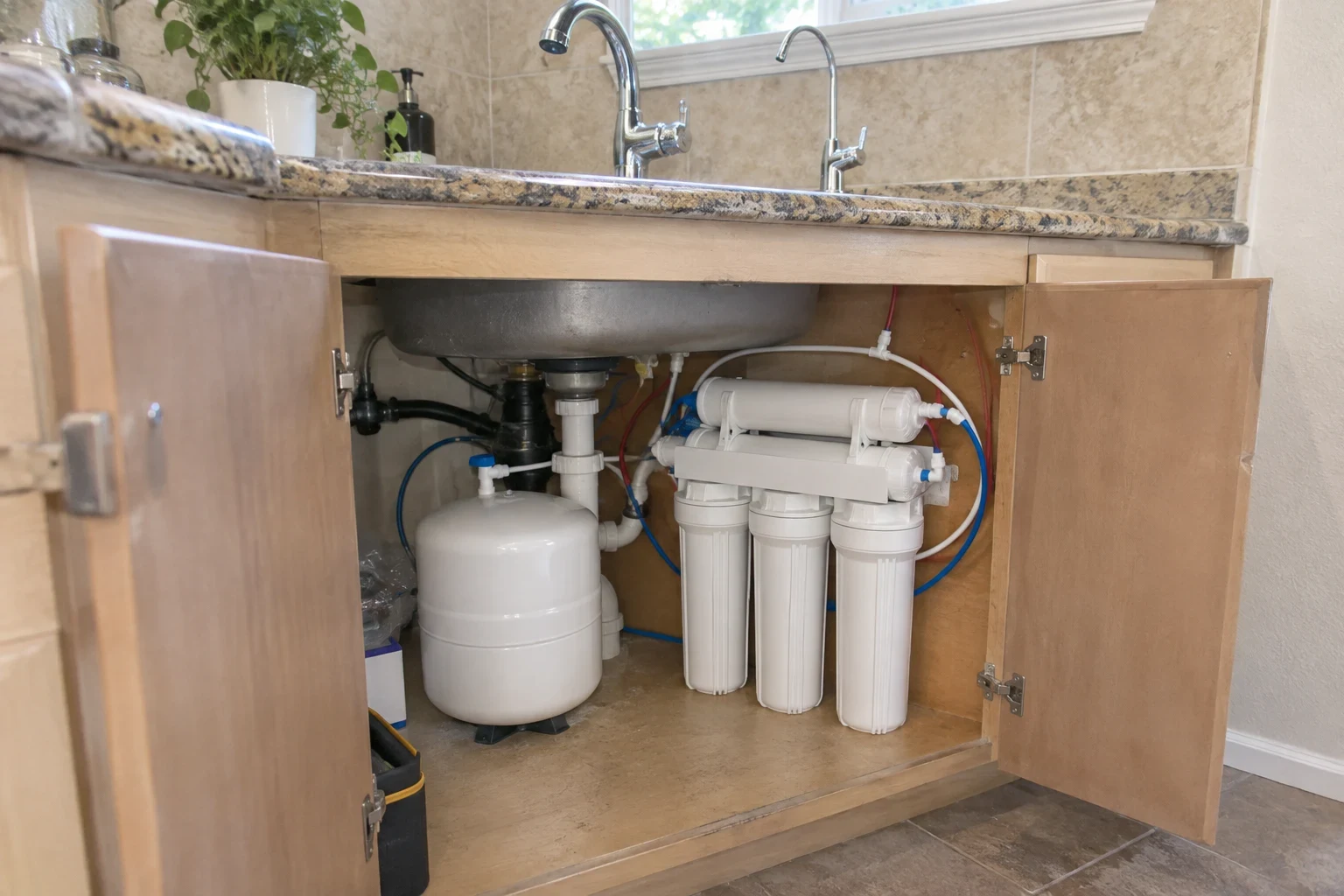
Hardly anyone can tell. The added sodium depends on how hard the water was to start. To skip sodium, use potassium chloride in the brine tank, or add an under-sink reverse osmosis system for low-sodium drinking and cooking water.
What salt should I use?
Evaporated salt pellets are cleanest and leave the least residue in the brine tank. Solar salt is fine as well. We advise against rock salt, since its grit collects over time and can cause bridging.
Will a softener get rid of chlorine taste?
It won't, since a softener handles hardness only. A carbon filter installed before the softener removes chlorine taste and smell and helps the resin last. See our Whole-Home Filtration page for how they pair up.
How often does salt need adding?
It comes down to your water's hardness, your household's daily gallons and the valve you pick. With a metered valve, most homes add salt every four to eight weeks. On install day we show you a quick way to check the tank.
Learn how hard your water actually is
A short test shows whether a softener pays off in your home and which parts fit. We'll go over the numbers and your choices without any pressure.