ServicesIron and Sulfur Removal
Iron and Sulfur Removal in Buda
Rust-colored rings in the toilet, laundry that comes out dingy, or a sulfur smell when you turn on the shower. We find out what is in your water, walk you through the treatment options and install the one that fits your home.
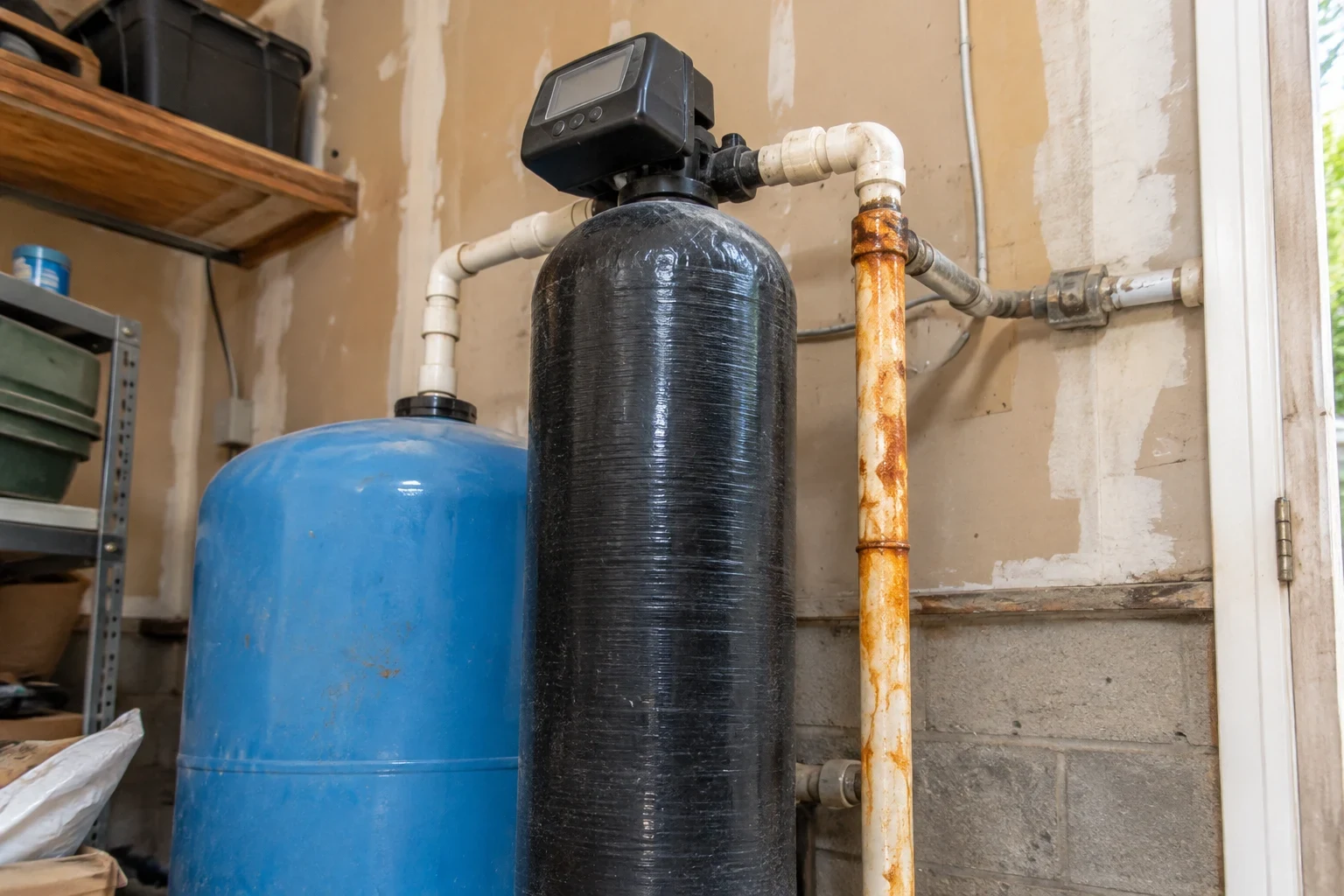
What iron and sulfur do to your water, and how we take them out
Iron and hydrogen sulfide are two of the most noticeable problems water can have. Iron leaves orange and brown stains on porcelain, grout and clothes. Hydrogen sulfide gives water that rotten-egg smell and can tarnish silverware and darken fixtures. Neither one usually makes you sick at typical levels, but both make your home less pleasant to live in.
The fix depends on what form the iron is in and where the smell comes from. Clear water that turns orange after it sits in a glass points to dissolved iron. Water that is already cloudy or rusty points to iron that has oxidized before it reaches you. A smell that shows up only on the hot side is often a water heater issue, not a water supply issue.
That is why we test before we recommend anything. Once we know the numbers, we explain the materials that can do the job, what each one asks of you over the years, and which we think suits your home.
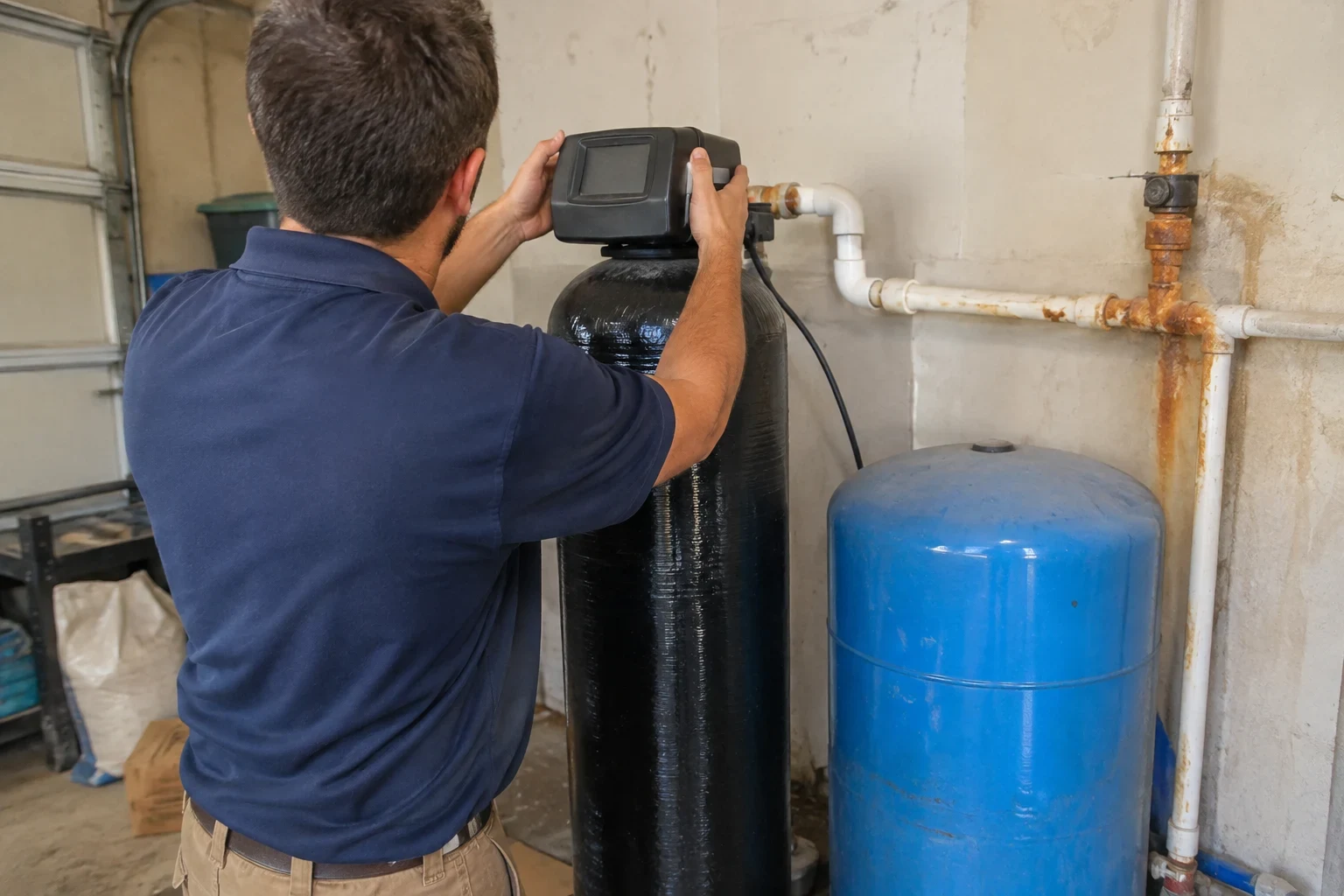
What the work includes
- 01
A water test first
We check iron, manganese, hydrogen sulfide, pH and hardness. pH matters more than most people expect, because several iron filter media only work well within a certain range.
- 02
A plain look at media options
Air-injection oxidizing filters use a pocket of air to turn dissolved iron and sulfur into particles, then trap them in a media bed. They need no chemicals and suit moderate levels. Catalytic carbon handles sulfur odor well and also improves taste. Manganese greensand is a workhorse for higher iron but needs periodic regeneration, which is more upkeep.
- 03
Chemical feed when the levels call for it
For heavy iron or strong sulfur, a small chlorine or hydrogen peroxide feed with a contact tank may be the right tool. It costs more and takes more space, so we only suggest it when the test shows the simpler media would struggle.
- 04
Installation and cleanup
We plumb the system at the point where water enters your home, add a bypass valve so you can service it easily, set the backwash schedule and leave the work area clean. Installation is free.
- 05
How to look after it
Before we leave, we show you how the backwash cycle works, what a healthy system sounds like and when media will eventually need replacing.
Questions about Iron and Sulfur Removal?
Call(512) 960-1590Signs your water has an iron or sulfur problem
Orange or brown stains
Rings in the toilet bowl, streaks in the tub and rusty spots on the driveway where sprinklers hit are classic iron marks. They come back no matter how hard you scrub.
A rotten-egg smell
Hydrogen sulfide is noticeable at very low levels. If you smell it at both the hot and cold taps, it is likely in the water itself.
Smell only from hot water
When the odor shows up only on the hot side, the metal rod inside your water heater is a common suspect, since it can produce that smell as it corrodes. Changing the rod to a different type sometimes clears it up, and we will tell you if that is the less expensive fix.
Dingy laundry and black spots
White clothes turn yellow or gray over time. Black specks or stains can point to manganese, which often travels with iron.
Slimy buildup in the toilet tank
A reddish, gel-like coating inside the tank can be iron bacteria. It changes which treatment will hold up, so it is worth testing for.
How the job runs
- 1
Free water test
We take samples from your tap and look at the results with you. If the problem turns out to be something else, like the water heater, we say so.
- 2
Options and a quote by phone
We lay out one or two media choices that fit your numbers, with the upkeep and footprint of each. You get a clear quote with no pressure to decide on the spot.
- 3
Install day
Most installs take part of a day. Water is shut off only while we tie into the main line, and we protect the floor where we work.
- 4
Startup and flush
We run the first backwash, flush the lines and check that the water comes out clear and odor-free before we go.
What moves the cost
Iron and sulfur systems vary more in price than most water treatment, because the right one depends on your test results. A light sulfur smell and heavy iron with bacteria are very different jobs. We explain each line of the quote so you can see where the money goes.
- Iron and sulfur levels
- Higher concentrations need larger tanks, stronger media or a chemical feed with a contact tank.
- Choice of media
- Air-injection and catalytic carbon systems are simpler to own. Greensand and chemical feed systems cost more to run and maintain but handle tougher water.
- Your water's pH and other minerals
- Low pH or manganese can mean adding a neutralizer or a second stage.
- Space and plumbing access
- Garage installs are usually straightforward. Tight utility closets or rerouting the main line add time.
Iron and sulfur removal questions
Is iron or sulfur in my water dangerous?
At the levels most homes see, iron and hydrogen sulfide are mainly nuisance problems: stains, smell and taste. They can still damage fixtures and appliances over time. A test tells you exactly what you are dealing with.
Will a water softener remove iron?
A softener can take out small amounts of dissolved iron, but iron can foul the resin and shorten its life. For anything beyond light iron, a dedicated iron filter ahead of the softener usually works better. We can tell you which applies after testing.
Why does only my hot water smell?
That usually points to a reaction inside the water heater rather than sulfur in your supply. Replacing the anode rod with a different type often fixes it. We will check for this before suggesting a full system.
How much maintenance do these systems need?
Air-injection and carbon systems backwash on their own, and the media lasts several years. Greensand and chemical feed systems need more regular attention, such as refilling a solution tank. We cover the upkeep for each option before you choose.
Will it get rid of the stains I already have?
The system stops new stains from forming. Existing ones need a cleaner made for rust or iron, and most come off once fresh iron stops arriving.
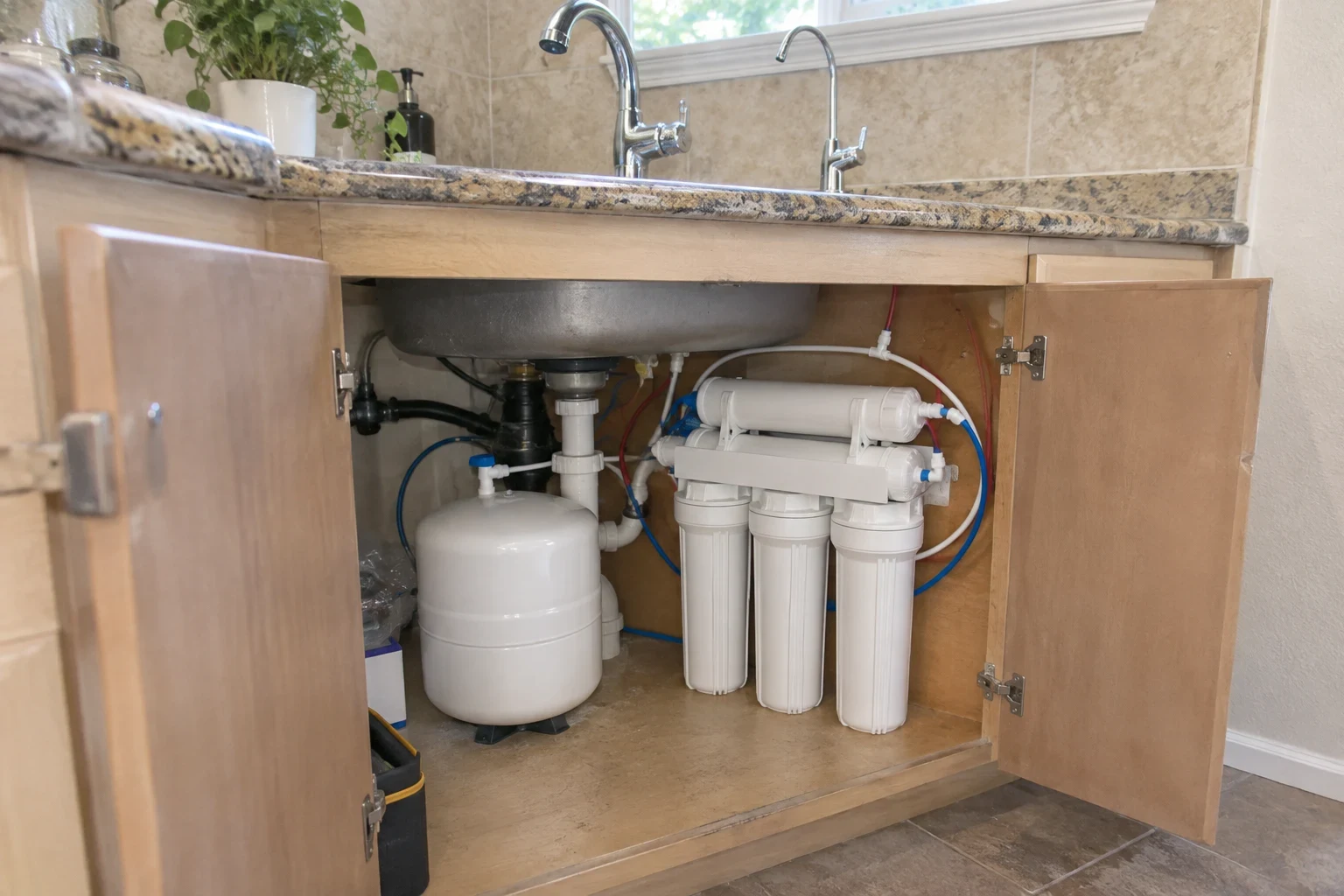
Find out what is behind the stains and smell
We will test your water at no charge, explain the media that fit your results and give you a quote by phone. If you go ahead, installation is free.